
Teaching risk management through the lens of asteroids and disaster strategies
- Estudiante Gimnasio Campestre
- Directora del Centro de Estudios Astrofísicos, Gimnasio Campestre
Correspondencia para los autores:
felipe.cepedaro@gmail.com
Recibido: 15 de octubre de 2025
Aceptado: 5 de noviembre de 2025

Table of Contents
ABSTRACT
Since implementing the warning network systems for near-earth objects and bolide events, everything has changed for the safety of the planet [1, 2]. However, this has not been the case in the past, as in the case in 1908 in Tunguska, Siberia, when an extraterrestrial object burned around 2150 km2 without any injury. Today, the IAWN (International Asteroid Warning Network) is tasked with developing a strategy using well-defined communication plans and protocols to assist governments in analyzing asteroid impact consequences and in planning mitigation responses.
In disaster management and impact response, there is a crucial fact to note: More than a thousand people were injured because the sonic wave during the Chelyabinsk event collapsed the city’s hospital system [3]. Today, there are around 50 cities with a population of more than 500,000.
This work offers a training and education program for cities with populations exceeding 5,000,000 to cope with the likely repercussions of such catastrophes in heavily populated metropolitan areas. Community awareness and avoidance of asteroidrelated dangers are the program’s aims based on earthquake preparedness standards. The risk of an impact is still low, but it’s not zero, just like with earthquakes. Both catastrophes can seriously damage or destroy structures and people. For example, a region’s tectonic setting affects the yearly risk of earthquakes, which may range from 0.01% to 1%.
Similarly, bolide impacts cannot be foreseen, but we must be prepared for the worst because of how dreadful they may be. The training program focuses on teaching people to detect early warning signals of an explosion or atmospheric impact, such as a blinding flash of light, and to take timely action to reduce injury. Important things to remember include staying away from windows to avoid being harmed by broken glass, finding a safe place to hide to decrease the risks of hearing loss and debris hits, and following evacuation instructions to the letter. Like inearthquake-prone countries, this project attempts to educate citizens to establish a resilience culture that will help minimize the impacts of these uncommon but high-impact events.
In calling attention to the parallels between NEO impacts and earthquakes: low probability, high impact hazards, this research underlines the necessity to integrate asteroid impact preparation into urban disaster response strategies. Through education, metropolitan centers may greatly strengthen public safety and raise their ability to respond effectively to foreign hazards, and therefore not generate dread in society.
Key Words: Bolides, Risk, Mitigation program, awareness
RESUMEN
Desde la implementación de los sistemas de alerta para objetos cercanos a la Tierra (NEOs, por sus siglas en inglés) y eventos de bólidos, se ha producido un cambio significativo en términos de seguridad planetaria [1, 2]. Sin embargo, este no fue el caso en el pasado, como lo demuestra el evento ocurrido en 1908 en Tunguska, Siberia, donde un objeto extraterrestre provocó la combustión de aproximadamente 2.150 km. de bosque sin causar víctimas humanas. Actualmente, la Red Internacional de Alerta de Asteroides (IAWN, por sus siglas en inglés) tiene como objetivo desarrollar estrategias basadas en planes de comunicación y protocolos bien definidos que permitan a los gobiernos analizar las consecuencias de un impacto de asteroide y planificar respuestas de mitigación.
En el ámbito de la gestión del riesgo y la respuesta ante desastres, es fundamental considerar un hecho clave: más de mil personas resultaron heridas durante el evento de Chelyabinsk debido a que la onda sónica colapsó el sistema hospitalario de la ciudad [3]. En la actualidad, existen alrededor de 50 ciudades con poblaciones superiores a los 500.000 habitantes.
Este trabajo propone un programa de formación y educación destinado a ciudades con más de 5.000.000 de habitantes, con el fin de prepararlas ante las posibles repercusiones de este tipo de catástrofes en áreas metropolitanas densamente pobladas. El objetivo del programa es fomentar la conciencia comunitaria y la prevención frente a los peligros asociados con los asteroides, tomando como referencia los estándares establecidos para la preparación sísmica. Aunque el riesgo de impacto sigue siendo bajo, no es nulo, al igual que ocurre con los terremotos. Ambos fenómenos tienen el potencial de causar daños severos o incluso la destrucción de estructuras e infraestructuras, así como pérdidas humanas. Por ejemplo, el riesgo anual de un terremoto en una región depende de su configuración tectónica y puede oscilar entre el 0,01% y el 1%.
De manera análoga, los impactos de bólidos no pueden predecirse con precisión, pero es necesario estar preparados debido a su potencial destructivo. El programa de entrenamiento se centra en enseñar a la población a reconocer señales de alerta temprana de explosiones o impactos atmosféricos, como un destello cegador de luz, y actuar con rapidez para reducir los daños. Entre las esenciales recomendaciones se encuentran: alejarse de las ventanas para evitar lesiones por fragmentos de vidrio, buscar refugio seguro para disminuir el riesgo de pérdida auditiva o impacto de escombros, y seguir rigurosamente las instrucciones de evacuación. Al igual que en los países con alta actividad sísmica, este proyecto busca educar a los ciudadanos para establecer una cultura de resiliencia que contribuya a mitigar los efectos de estos eventos poco frecuentes pero de alto impacto.
Al destacar las similitudes entre los impactos de objetos cercanos a la Tierra y los terremotos -ambos caracterizados como amenazas de baja probabilidad pero alto impacto -, esta investigación subraya the necesidad of integrar la preparación ante impactos de asteroides dentro de las estrategias urbanas de respuesta ante desastres. A través de la educación, los centros urbanos pueden fortalecer significativamente la seguridad pública y mejorar su capacidad de respuesta frente a amenazas externas, evitando así la generación de pánico en la sociedad.
Palabras clave: Bólidos, Riesgo, Programa de mitigación, Concientización
Nowadays, the IAWN (International AsteroidWarning Network) is tasked with developing a strategy that utilizes well-defined communication plans and protocols to assist governments in analyzing the consequences of asteroid impacts and planning mitigation responses.
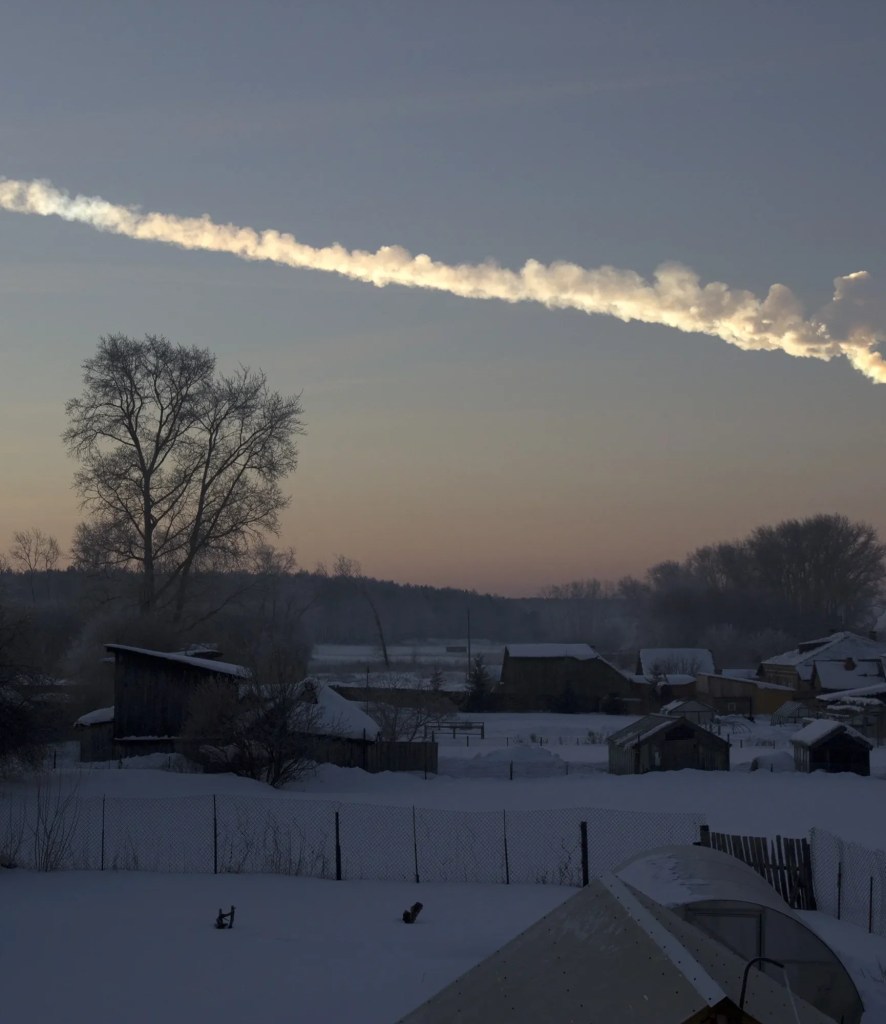
INTRODUCTION
Since implementing theWarning Network Systems for near-earth objects and bolide events, everything has changed for the safety of the planet [1, 2]. However, this has not been the case, as in 1908 in Tunguska, Siberia, when an extraterrestrial object burned around 2150 km2 without any injury. Nowadays, the IAWN (International AsteroidWarning Network) is tasked with developing a strategy that utilizes well-defined communication plans and protocols to assist governments in analyzing the consequences of asteroid impacts and planning mitigation responses.
In disaster management and impact response, for example, there is a crucial fact to remark: More than a thousand people were injured because the sonic wave during the Chelyabinsk event collapsed the city’s hospital system [3]. Among these, and regarding the communication of such events, it is crucial to know how one can communicate responsibly and efficiently with facts. In 2025, we are in a critical era for planetary defense, particularly regarding the asteroid 2024YR4. Advances in astronomical observations and impact prediction models have heightened awareness of the potential threats of near-Earth objects (NEOs). 2024YR4 has drawn significant attention due to its trajectory, sparking discussions within the scientific community and global agencies about possible mitigation strategies. While the likelihood of impact has been clarified, the mere possibility necessitates preparedness, and now is the opportunity to establish and test well-defined protocols around risk mitigation, covering the pre-impact, impact, and post-impact phases.
NASA’s planetary protection program has been in existence for a while now. The planet defense strategy and action plan from 2023 elaborates on the key actions to take over the next ten years to improve planetary defense against near-Earth objects. The Catalog of NEOs includes asteroids and comets, which, in their trajectory toward the Earth, pose some risks based on their size. Any object traveling towards the Earth less than 10 meters will disintegrate in the Earth’s atmosphere, whilst objects above that pose a regionwide risk, while 1 km-sized objects and larger can pose a global threat. Jurisdiction across the globe has improved, but the detection of over 50% of news above 140 meters remains undetected. This necessitates NASA’s exhaustive argument to fortify its current NEO detection mechanisms to astronomical surveyors and space-based telescopes like the NEO Surveyor set to launch in 2028. The evaluation of potential strategies for deflection or destruction of the object before impact will take high priority, and NASA’s approach towards this is extremely sophisticated. The ultra-high-resolution DART mission conducted in 2022 fine-tuned the target detection mechanisms of kinetic impactors, allowing for the divergence of International Space Agencies. NASA is open to collaboration with international agencies, including FEMA, to develop comprehensive plans for impact response and maximize the advantages of the DART operations. NASA also emphasizes inter-agency coordination with FEMA to develop impact response protocols and strengthen international collaboration through the International Asteroid Warning Network (IAWN) and SMPAG. However, challenges remain, including funding constraints, data-sharing limitations, and public misinformation. The strategy underscores the need for sustained investment, international cooperation, and proactive mitigation to safeguard Earth from potential asteroid threats, ensuring long-term planetary security.
This work offers a training and education program for cities with populations exceeding 5, 000, 000 to cope with the likely repercussions of such catastrophes in heavily populated metropolitan areas. Community awareness and avoidance of asteroidrelated dangers are the aims of this program, which is based on earthquake preparedness standards. This article is organized as follows: a brief introduction to asteroids and the most relevant aspects of some important facts related to them. Next, we present the mitigation plan. There, we explain the several stages as well as the specific way to proceed before this kind of situations, and finally, we set some generals conclusions.
Asteroids and Near Earth Objects
Asteroids are rocky objects, generally opaque, whose orbits evolve around the Sun, just like the planets in our Solar System. They exist in varying sizes, dynamic parameters, and chemical compositions. Asteroids are considered to be the remnants of the formation and evolution of our Solar System. Therefore, it is crucial to understand their chemical and geological characteristics. For this reason, NASA, through the Center for Near- Earth Object Center (CNEOS), provides information on all those objects that are close enough to the Earth and those that could represent a possible risk of impact with the Earth. In 2018, through the analysis of multiple datasets from the second data release of the European Space Agency’s (ESA) Gaia, it was possible to determine the orbits of more than 14,000 asteroids in our Solar System. However, this number increased considerably in the last released data from Gaia 3 in June 2022. The results showed the orbits of more than 150.000 asteroids [4]. Now, while it is true that None of these objects currently represents a threat; nevertheless, the dynamics between them give rise to small fragments that possibly end up entering the Earth’s atmosphere.
Most of the time, when talking about asteroids, the first thing that comes to mind is not precisely how important they are for understanding the evolution of our planet, but, on the contrary, we think of the danger that these objects may represent for the survival of the Earth. On the one hand, thanks to SENTRY, a software of NASA’s Jet Propulsion Laboratory (JPL), there is a constant monitoring of what are called Near-Earth Objects (NEO). As in one of the SENTRY reports, Earth has more than 30.000 NEOs, and, so far, thanks to the previous results of NASA’s OSIRIS-REX mission, it is known that the asteroid Bennu, one of the first of the SENTRY risk list, has a small probability of impact in the year 2182 [5]. That is, despite the large number of objects close to our planet, there is not a single one that, so far, represents a danger of any magnitude to climate change or extinction levels. In recent decades, it has become increasingly clear that the impact of interplanetary bodies on other planetary bodies is one of the most important geological processes in the Solar System and has played a fundamental role throughout the history of the Earth, resulting in both destructive and beneficial effects.
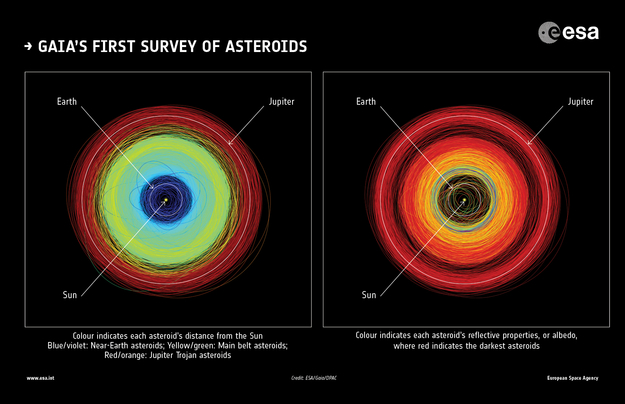
Figure 1: Gaia view of more than 14.000 asteroids. Gaia Data Processing and Analysis Consortium (DPAC); P. Tanga, Observatoire de la Cote d’Azur, France; F. Spo- to, IMCCE, Observatoire de Paris, France; NASA/WISE, 2022
The surface of the Earth has been shaped by numerous geologic processes over the past four and a half billion years, as well as by meteorite impact events. However, the latter was not recognized as a fact of reality in the geological processes of the planet [6]. So, that is why there are several fireball monitoring centers around the Earth [7, 1] allowing us to keep a constant record of these types of events and those capable of reaching the Earth with a considerable amount of mass. Among these types of events, the CNEOS keeps updated on the fireball events, indicating their location as well as the total impact energy and the total calculated impact energy of each one of them. Regarding this, there is an important event in particular. The object that burst into the atmosphere on February 15, 2013, over Chelyabinsk Oblast, Russia, was an object of approximately 20 meters in diameter that exploded while it was still in the air, leaving more than 1, 500 people injured due to the impact of the shock wave on several buildings.

Figure 2: Images of the Fireball impact in Colombia, between 01/01/24 and 01/11/25
On the Cheliabisky Event
One of the important aspects to highlight around the Cheliabisky event is the fact that 1.500 people were injured by the shock wave blast. There are several aspects to consider regarding this, and we should think about the possible executable methodology to manage these scenarios to avoid damage.
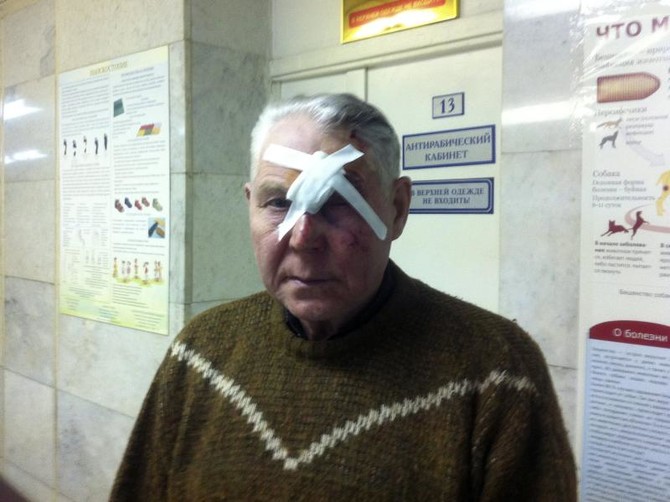
Figure 3: One of the injured persons after the shockwave blast during the Chelyabinsk.
Some Physical Aspects
On February 15, 2013, a bolide entered over the city of Chelyabinsk in Russia. This represents the largest recorded object to strike the Earth in more than a century. The bolide released 440 kT of energy- around 27 times the energy released by the Nagasaki bomb- causing widespread damage around the area.

Figure 4: The Image shows the Fireball from 1988 Apr 15 to 2025 Jan 11. In particular, it highlights the Chelyabinsk event, the Red Big Dot. CNEOS NASA
There are several important facts to take into account concerning possible damage to people and infrastructure in general, the energy, the decibels (dB) of the intensity of the sound, and the area covered by the event.
The Threshold of hearing for human beings is equal to 0 dB, and the upper limit in dB for eardrum damage is around 100 dB [8], which means that any event causing a sound over this number will affect the population in the area. Now, considering the reference value of the pressure for the Human being threshold hearing P0 = 20μPa (MicroPascal), and the blast’s peak pressure P around 500− 700 Pa at the distance around 20 Km, the sound pressure in decibels for the Chelyabinsk bolide is

So, with this value close to the upper limit, this is one aspect to consider when constructing a viable and safe management plan for these kinds of risks. Now, in this case, there was no way to prepare, given the specific circumstances of it. However, there are several events discovered within a few hours of impact on Earth. This was the case of the object name 2023 CX1. A small object was discovered on Feb 12 at 20:18 UTC, almost 7 hours before impact, by Krisztián Sarneczky at the GINOP KHK observatory in Hungary. Within minutes of the discovery’s posting on the Minor Planet Center’s Near-Earth Object Confirmation Page, JPL’s(The Jet Propulsion Laboratory) Scout system identified the possibility that the asteroid could be on an impact trajectory with Earth.
Given the high risk posed by a bolide impact in populated areas, it is imperative to have a wellstructured and effective mitigation plan that minimizes human and material losses. Preparation for such events not only involves early detection and monitoring but also the implementation of clear
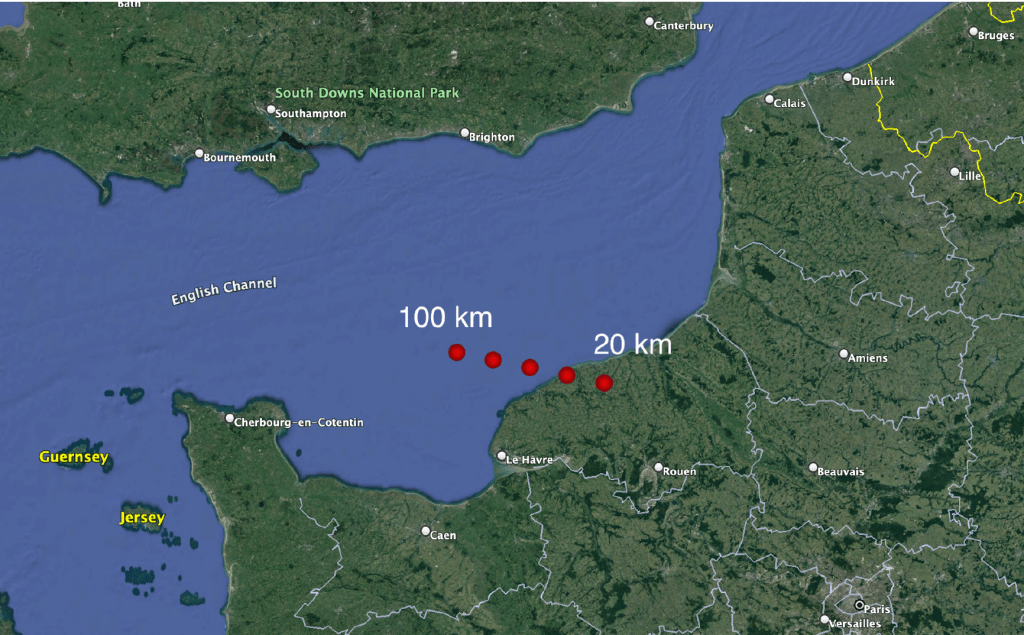
Figure 5: Ground track of 2023 CX1: Projection on the ground of the location of 2023 CX1 as the altitude decreases from 100 km to 20 km.
strategies that guide the population through each phase of the impact, from the moments before the event to the immediate response and recovery. In this context, the following mitigation plan establishes a set of measures organized into different stages, covering everything from preventive education to the immediate actions that must be taken at the moment of impact and its aftermath. These strategies have been designed based on the analysis of past astronomical events and the application of scientific principles to maximize community safety and resilience in the face of this high-energy phenomenon.
METHODOLOGY
It involves a systematic approach to developing and arguing a proposal or analysis, starting from the review, selection, and analysis of theories, methods, procedures, and knowledge relevant to the topic.
RESULTS
The Mitigation Risk Plan for Bolide Events
The frequency of danger from near-Earth objects (NEOs) to global security is very modest, although the potentially catastrophic implications of an impact event are substantial. This extensive risk mitigation strategy incorporates cutting-edge technical innovations, global protocols, and disaster management methodologies to comprehensively handle NEO impact risks, including early detection, monitoring, public education, and catastrophe response. The major emphasis is on building a framework suited to Colombia, with the plan also proposing worldwide ideas aimed at boosting cooperation and readiness. The ultimate purpose is to establish a systematic and coordinated effort to reduce the loss of life, economic damage, and long-term environmental damage arising from NEO impacts.
Phase 1. Early Detection and Monitoring Systems
Goal: To promptly identify near-Earth objects that might crash into the Earth, allowing a lead time for mitigation operations so that they can be effectively successful.
Action plan:
Leverage existing systems such as NASA’s Planetary Defense Coordination Office (PDCO), the European Space Agency (ESA) NEO Segment, and the International Asteroid Warning Network (IAWN). (UK, Brazil, Canada) Nations like Colombia should be included in the global detection system, providing a shared pool of resources and information.
Use current and prospective observatories, such as Pan-STARRS (Hawaii) and the Vera C. Rubin Observatory. The Rubin Observatory is intended to detect smaller objects on a collision path with Earth. The building of the LSST (Large Synoptic Survey Telescope) will boost detection rates by monitoring a wide section of the sky each night. In this approach, it will be feasible to monitor if any NEO is likely to be affected.
Establish radar tracking capabilities that enable real-time monitoring of NEO trajectories. For example, the Arecibo Observatory in Puerto Rico, which is presently inoperative, should be replaced with high-power radar installations strategically dispersed across the globe. In Colombia, these radar systems may be put in distant places with minimal human activity, enabling continuous and uninterrupted surveillance.
Develop a warning system that automatically interacts with government agencies, emergency services, and the public. This system should incorporate interaction with national weather and disaster warning systems, ensuring that notifications reach all concerned parties in real time. Alerts should contain information such as the magnitude of the NEO, its trajectory, and probable impact zones. In Colombia, mobile apps and SMS-based alerts should be built to reach rural and urban regions and deliver emergency warnings. Likewise, a link must be built with the media so that the community accepts the information as truthful.
An international cooperation structure should be designed to facilitate NEO data exchange across space agencies and academic and business entities. A cloud-based infrastructure might give realtime data on the location, velocity, and trajectory of NEOs.
Phase 2. Detection Tools and Systems
Goal: To increase the capabilities of existing detection techniques to offer more complete and precise information on NEO size, composition, and velocity
Action Plan:
Deploy and operate modern space-based observatories like NASA’s NEOWISE project, which identifies and classifies NEOs using infrared technology. This infrared technology is capable of spotting objects that reflect negligible visible light, which would otherwise remain undiscovered by optical telescopes.
To limit the consequences of possibly minor NEOs that may go unnoticed by optical telescopes, improve radar systems with better resolution. The projected Goldstone Radar System, for instance, can follow objects as tiny as 100 meters and give data on their spin, orbit, and material composition.
In conjunction with international organizations, deploy surveillance satellites, particularly those intended to scan the sky for tiny, fast-moving objects. These satellites should be equipped with both visible and infrared imaging capabilities.
Phase 3. Public Education and Prepar
Goal: To ensure that the populace recognizes the danger of NEO effects, how to spot the signals of an impact event, and how to take precautionary actions.
Action Plan:
Leverage Colombia’s current educational channels (e.g., television, radio, and social media) to communicate information about NEOs. Work with national TV networks, such as RCN and Caracol, to show public service advertisements (PSAs) describing the hazards, probable effect scenarios, and safety actions. Ensure that the message is clear and consistent.
Produce instructional resources that may be provided to schools, colleges, and community centers. These materials should include:
- Flyers detailing NEO impact possibilities.
- Safety and evacuation strategies for NEO strikes
- Informational websites and applications where the public may receive updates about NEO risks
Organize community seminars around Colombia, concentrating on cities like Bogotá a, Medellín, and Cali, as well as rural regions, where risk awareness and disaster preparation should be focused. Invite local specialists in crisis management and space science to facilitate these sessions.
Phase 4. Incorporating NEO Impact Risk into the National Risk Management Framework
Goal: To include Near-Earth Object (NEO) Impact Risk in national disaster management policies. The National Disaster Risk Management Unit (UNGRD) plays a critical part in this process by coordinating the integration of NEO effects into disaster preparation programs and ensuring that the public is informed and ready for such uncommon but high-impact occurrences. actions.
Action Plan:
- Classification of NEO Risk: The UNGRD must formally identify NEO effects as part of the national risk management system. NEO hazards should be managed similarly to earthquakes, floods, and other natural catastrophes by categorizing them according to their potential effect and probability of occurrence.
Risk Categorization: The effects may be grouped into low, medium, or high-risk categories depending on the size and trajectory of the possible item, and vulnerability maps can be generated to highlight locations most at risk.
Inclusion in National Disaster Plans: Incorporate NEO risk mitigation into national disaster response plans, ensuring that local and regional emergency services are prepared for NEO-related occurrences.
- Annual Campaigns: The UNGRD should launch yearly public awareness campaigns on NEO dangers. These programs should be aimed at educating the public about the nature of NEOs, the possible risks they pose, and the precautions people should take in case of an impact threat.
- Campaign Content: Campaigns should educate the public about the features of NEOs, such as their composition, the possible repercussions of a crash (such as tsunamis, fires, and shockwaves), and how these impacts might affect populations. Special attention should be paid to the importance of public preparation, notwithstanding the low chance of an incident.}
- Multi-Channel Approach: Use conventional (radio, TV, newspapers) and modern (social media, websites, apps) methods to convey information. Public service announcements (PSAs) should be aired periodically to achieve wide reach.
- Incorporate NEO Risk Education into Curricula: Similar to earthquake preparation, the UNGRD should demand that NEO impact education be incorporated in the school curriculum.
School Programs: From elementary to higher education levels, pupils should get systematic instruction on the hazards of NEO impacts, the foundations of planetary defense, and the steps they may take in the case of an alarm.
University Engagement: At universities, NEO impact research should be supported. Engineering, astronomy, and environmental sciences departments may play a vital role in disseminating awareness and creating mitigating solutions.
Training for Businesses: Companies, particularly those in highly populated metropolitan locations, should be urged to conduct NEO impact response training.
Private Sector Participation: Large firms and organizations should be part of the campaign by incorporating NEO impact response processes into their crisis management and business continuity strategies.
- National NEO Impact exercises: Similar to earthquake exercises, the UNGRD should arrange yearly NEO impact drills throughout the nation.
Drill Phases: The drills should be planned with three primary phases:
– Early Warning Phase: Public warning and guidance on how to react
– Evacuation and refuge Phase: Providing evacuation routes and safe refuge sites
– Post-Impact Response: Coordination between emergency responders, medical teams, and local authorities
School and Workplace Simulations: Schools and organizations should carry out their own internal simulations
Specialist exercises: For high-risk zones, such as coastal locations where tsunamis from NEO impacts can be a worry
Phase 5. Immediate Post-Impact Response Protocol
Goal: To guarantee the safety and well-being of the impacted populations, this stage of the mitigating plan describes the required protective actions, injury control strategies, and post-impact operations.
Action Plan:
If anyone sees a strong, bright event in the sky, people should avoid direct viewing as the related heat radiation might either temporarily or permanently affect eyesight. Additionally, the accompanying shockwave may reach within seconds or minutes, providing a high danger of harm due to structural damage and flying debris.
Sheltering and Impact Mitigation:
- Seek immediate shelter in structurally reinforced areas
- Avoid being near windows, glass doors, and delicate buildings
- Interior chambers, subterranean areas, and structures intended to endure high-pressure occurrences are optimum shelters
- If caught outdoors, assume a protective posture
- Lie prone with the head covered, sheltering important organs from any debris
- Protects the ears to reduce harm from the pressure wave
Hearing Protection: The extreme pressure changes after a bolide impact may cause temporary or permanent auditory damage, including tympanic membrane rupture and sensorineural hearing loss.
- Cover the ears securely using hands, cloth, or other accessible objects
- Seek urgent medical examination if symptoms such as ringing in the ears (tinnitus), hearing loss, or dizziness arise post-impact
Minimizing Communication Disruptions: Mobile networks may face congestion; consequently, phone use should be confined to urgent emergency calls.
Once the primary shockwave has subsided, it is essential to conduct an initial assessment of injuries and provide immediate first aid. The most common injuries in a bolide impact scenario include lacerations, blunt force trauma, burns, and auditory damage.
Triage and First Aid Protocols
- Assess the degree of injuries in oneself and others
- For severe bleeding, apply direct pressure with a clean towel to halt hemorrhaging
- If a fracture is suspected, immobilize the injured limb and minimize unnecessary movement
- In situations of unconscious patients, put them in the lateral recovery position to avoid airway blockage
Assessment and Management of Auditory Trauma
- If patients feel significant ear discomfort, loss of hearing, or balance issues, medical assessment is essential
- Persistent tinnitus or a sense of fullness in the ears may suggest barotrauma and should be handled by medical personnel
To reduce secondary dangers, participants must go in an orderly way to preestablished safety zones, following procedures defined in readiness exercises:
- Maintain group cohesiveness to avoid separation and confusion
- Avoid damaged infrastructure since structural collapse remains a considerable danger
- Await official clearance before leaving shelters
- Follow emergency orders using authorized communication platforms
CONCLUSIONS
Considering the recent hazards 2024YR4, expected Earth contact in 2032, using a planned mitigating plan for bolide occurrences marks significant progress in planetary defense strategy. Combining early detection, monitoring system enhancement, public education, risk management framework integration, and post-impact response protocols, the complete five-phase approach described in this study offers a strong basis for addressing immediate and long-term NEO challenges. The Chelyabinsk catastrophe reminds us soberly of the terrible power of even somewhat small-sized bolides with their 150 dB shock wave and extensive structural destruction. When one considers the trajectory and mass properties of YR4, the need to use these mitigating techniques becomes even more urgent. Refining our knowledge of 2024YR4 orbital dynamics and possible impact scenarios depends on the combination of advanced space-based platforms and sophisticated radar monitoring systems described in Phases 1 and 2. Given the 2024YR4 approach, the suggested public preparation policies and educational framework become much more important.
Communities may build the resilience required to meet both anticipated effects, like 2024YR4 and unexpected bolide occurrences, by using lessons learned from past events like Chelyabinsk and Tunguska, while using current communication technology and institutional frameworks. Particularly crucial is the fresh strategy, described in Phase 4, to include NEO impact risk into national disaster management systems. This deliberate inclusion of astronomical hazards into current emergency response infrastructures constitutes a fundamental advance in our approach to planetary defense. The effectiveness of this integration, shown by the cooperative efforts of space agencies and local disaster management authorities, offers a paradigm for the next worldwide collaboration in handling cosmic hazards. Looking forward, the evolution of these all-encompassing mitigating plans responds to current hazards like 2024 YR4 and represents a basic change in our attitude toward planetary defense. The convergence of technology innovation, public education, and institutional coordination reflects a new paradigm in catastrophe preparedness—one that respects both the rare and the potentially catastrophic nature of NEO effects. As we continue to perfect these techniques, our ability to defend human life and infrastructure against cosmic dangers will grow, assuring a more resilient future for societies globally.
REFERENCES
Goodman, S. J. (2020). GOES-R series introduction. In The GOES-R Series(pp. 1-3). Elsevier.
Jenniskens, P., Albers, J., Tillier, C. E., Edgington, S. F., Longenbaugh, R. S., Goodman, S. J., … & Stern, E. (2018). Detection of meteoroid impacts by the Geostationary Lightning Mapper on the GOES‐16 satellite. Meteoritics & Planetary Science, 53(12), 2445-2469.
Dudorov, A. E., Badyukov, D. D., Zamozdra, S. N., Gorkavyi, N. N., Eretnova, O. V., Khaibrakhmanov, S. A., … & Taskaev, S. (2016, April). Meteoroid, bolide and meteorite «Chelyabinsk». In Materials Science Forum(Vol. 845, pp. 273-284). Trans Tech Publications Ltd.
Galluccio, L., Delbo, M., De Angeli, F., Pauwels, T., Tanga, P., Mignard, F., … & Bertone, S. (2023). Gaia Data Release 3-Reflectance spectra of Solar System small bodies. Astronomy & Astrophysics, 674, A35.
Farnocchia, D., Chesley, S. R., Takahashi, Y., Rozitis, B., Vokrouhlický, D., Rush, B. P., … & Lauretta, D. S. (2021). Ephemeris and hazard assessment for near-Earth asteroid (101955) Bennu based on OSIRIS-REx data. Icarus, 369, 114594.
Osinski, G. R., Grieve, R. A., Ferrière, L., Losiak, A., Pickersgill, A. E., Cavosie, A. J., … & Simpson, S. L. (2022). Impact Earth: A review of the terrestrial impact record. Earth-Science Reviews, 232, 104112.
Vida, D., Šegon, D., Gural, P. S., Brown, P. G., McIntyre, M. J., Dijkema, T. J., … & Zubović, D. (2021). The global meteor network–methodology and first results. Monthly Notices of the Royal Astronomical Society, 506(4), 5046-5074.
Keay, C. S. (1980). Anomalous sounds from the entry of meteor fireballs. Science, 210(4465), 11-15.