
Peace pioneers navigating conflict resolution in schools
Self Contained teacher, Gimnasio Campestre
Recibido: 25 de marzo de 2026
Aceptado: 10 de mayo de 2026
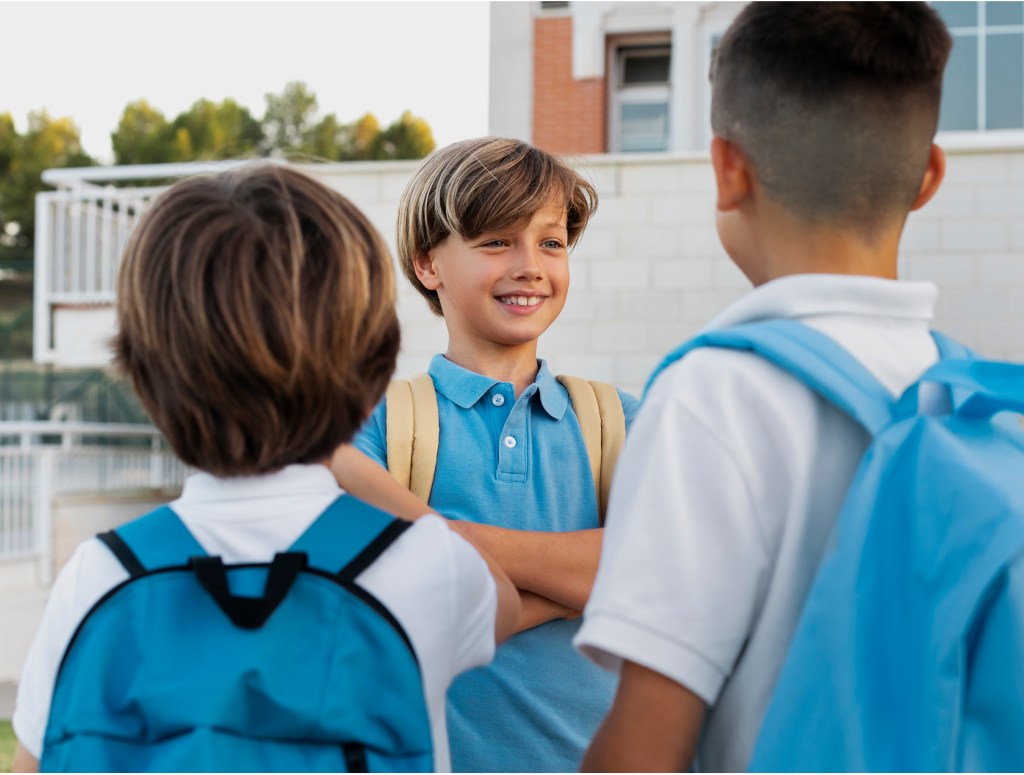
Table of Contents
ABSTRACT
This study aimed to observe and classify the presence or absence of conflict resolution strategies within a specific private school context in Bogota, Colombia. Results showed that students use differing strategies in these moments, but the study did not clearly exhibit any pattern. Researchers believe that students must be taught conflict resolution strategies and that clearer evidence can be found in a more longitudinal study.
Key words: Conflict Resolution, Elementary School, All boys school, Strategies of Conflict Resolution, Rahim’s Model, Gimnasio Campestre.
RESUMEN
Este estudio tuvo como objetivo observar y clasificar la presencia o ausencia de estrategias de resolución de conflictos en un contexto escolar privado en Bogotá, Colombia. Los resultados mostraron que los estudiantes utilizan diferentes estrategias en estos momentos, pero el estudio no mostró ningún patrón claro. Los investigadores creen que es necesario enseñar a los estudiantes las estrategias y que se puede encontrar evidencia más clara en un estudio más longitudinal.
Palabras clave: Resolución de conflictos, primaria, colegio masculino, estrategias de resolución de conflicto, Modelo de Rahim, Gimnasio Campestre.
Students often lack the requisite abilities and strategies to resolve conflicts amicably and appropriately.
INTRODUCTION
Conflict, disagreement, and transformation are intrinsic elements of human experience, persisting from early childhood through adulthood. As individuals navigate the complexities of social interactions, it becomes evident that such challenges are an unavoidable aspect of existence.
Considering this reality, it is imperative for individuals to acquire strategies for conflict resolution. Conflict resolution empowers parties to identify peaceful solutions to disagreements, fostering an environment where disputes are addressed constructively. Mastery of this skill is essential for personal development and harmonious coexistence.
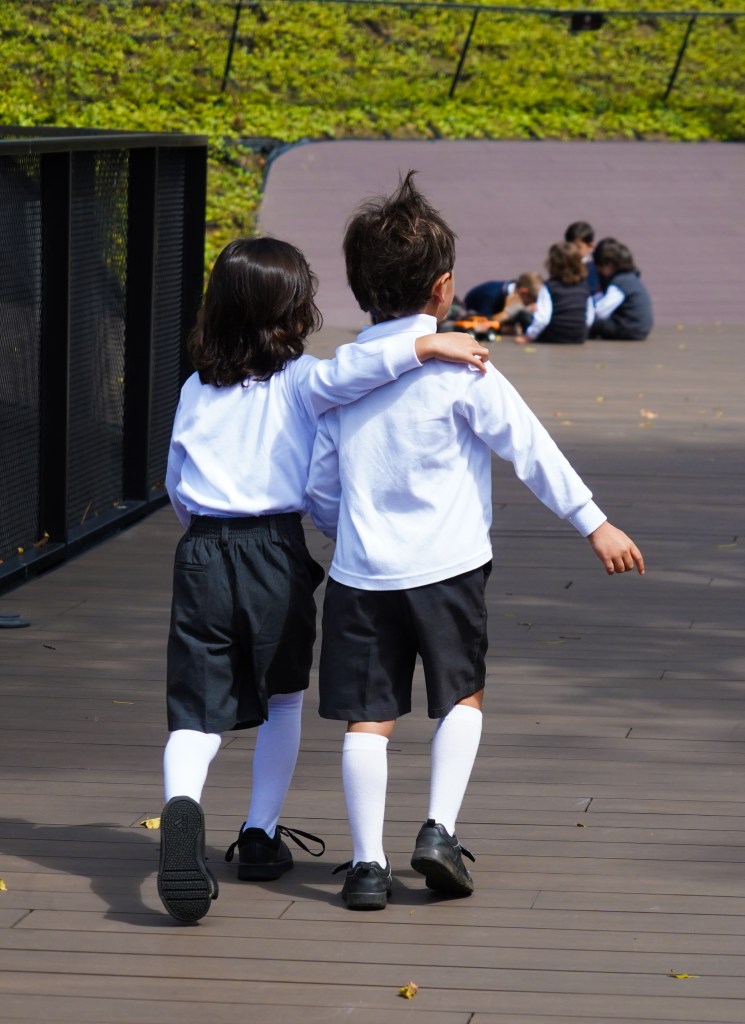
At GC, elementary school students encounter conflicts regularly, both within and beyond the classroom setting. Consequently, it is of utmost importance to impart to young learners the methodologies for navigating these situations with efficacy. By equipping students with tools to approach conflict with respect, assertiveness, and productivity, we lay the foundation for their success in interpersonal relationships.
Observations by researchers indicate that students often lack the requisite abilities and strategies to resolve conflicts amicably and appropriately. Frequently, disputes are settled through physical or aggressive means, underscoring the necessity for structured instruction in conflict resolution.
This study aims to examine how students at GC navigate conflicts and challenging situations. In its initial phase, the researchers will review existing literature on conflict resolution to identify established approaches and frameworks. Subsequently, the study will observe and categorize the prevalent conflict resolution strategies employed by elementary students at GC, both within and outside the classroom. An observational scale will be developed to systematically identify and analyze the types of conflicts encountered and the methods employed to resolve them.
Given the observations by educators at GC and the apparent lack of assertive strategies among students to address conflicts, this investigation adopts a critical perspective. It seeks to provide practical solutions to this pressing issue by identifying the various types of conflicts students face and assessing the resources they currently utilize for resolution. Furthermore, the study aims to evaluate the effectiveness of these tools in enhancing students’ ability to resolve conflicts constructively.
While Social and Emotional Learning (SEL) programs have become integral in fostering emotional awareness, empathy, and interpersonal skills, they have yet to fully develop as a foundation for teaching students assertive and constructive conflict resolution. Current SEL programs often offer a broad framework for emotional growth, but additional targeted strategies are necessary to equip students with the specific skills required to navigate conflicts effectively.
To address this gap, the study advocates for the development of age-appropriate, hands-on methods that actively engage students. By incorporating activities that are both relevant and engaging, students are more likely to internalize concepts of respect, empathy, and open communication. This approach aims to empower students to apply these principles in real-life scenarios, thereby enhancing their ability to resolve conflicts both independently and collaboratively.
Why Teaching Conflict Resolution Matters
Some might believe that children will naturally learn to resolve conflicts on their own. However, research shows that conflict resolution must be actively taught and modeled. Providing students with clear strategies helps them apply these skills in real-life situations. This approach leads to several positive outcomes:
- Prevention of Escalation: Teaching conflict resolution can stop minor disagreements from escalating into bigger issues.
- Strengthening Relationships: Effective conflict resolution fosters better communication and understanding among peers.
- Boosting Self-Efficacy and Self-Esteem: Students gain confidence in their ability to resolve conflicts, enhancing their self-worth.
Strategies for Teaching Conflict Resolution
To help our students succeed, we can incorporate the following strategies into our teaching: (Taken from Heydenberk & Heydenberk, 2007) Model Positive Behavior: Demonstrate respectful conflict resolution in your interactions. Students learn by observing adults.
Role-Playing Exercises: Create scenarios where students can practice resolving conflicts in a safe environment. This helps them develop empathy and problem-solving skills.
Encourage Active Listening: Teach students to listen to each other without interruption. This builds mutual respect and understanding.
Use “I” Statements: Encourage students to express their feelings using “I” statements (e.g., “I feel upset when…”). This helps them communicate without blaming others.
Identify Common Goals: Help students find shared interests when resolving conflicts, promoting cooperation, and teamwork.
Problem-Solving Techniques: Guide students in brainstorming solutions together, encouraging them to consider various options before deciding on a resolution.
Continuous Practice: Integrate regular discussions and activities around conflict resolution to reinforce these skills throughout the school year.
By implementing these strategies, we can empower students to manage conflicts effectively and foster a more harmonious learning environment. Teaching conflict resolution not only prepares them for current interactions but also equips them with essential life skills for the future.
THEORETICAL FRAMEWORK
Introduction: Understanding Conflict
Conflict, as defined by Crispino (2007), arises from incompatibilities between individuals or groups, often sparked by differences in opinions, viewpoints, or interpretations of events. However, Valente, Lourenço, and Németh (2020) emphasize that conflict only truly exists when those involved are aware of the discrepancy, noting that “for a conflict to exist, the people or groups involved must be aware of a difference between them.” They also argue that conflict is a multifaceted concept, with definitions varying based on context, process, and disciplinary lens: “definitions can differ in context, process, intervention and study areas” (Valente, Lourenço, and Németh, para. 7).
Conflict classification can vary depending on the author or researchers. Valente, Lourenco and Nemeth (2020) propose 4 types of conflict: Structural, which refers to differences or inequivalences of power or money; Value, which refers to differences in religion and ideology; relationship, which refers to emotions, misperceptions, stereotypes, inadequate or deficient communication, negative and/or repetitive behaviors; interest, which refers to perceived or real competition over fundamental concepts, procedural interests or psychological interests; and, data which refers to lack of or wrong information, different points of view, different data interpretations, and assessment procedures.
Torrego (2003), narrowing the lens to educational environments, defines school conflict as a disagreement regarding ideas, principles, or values within the school community. He categorizes school conflict into three types. The first, relationship-communication conflict, emerges from deteriorated interactions and is often characterized by aggressions, struggles, offenses, rumors, defamations, and misunderstandings. The second involves interests and needs, where the disagreement lies in how to perform a task or a job. The last type relates to beliefs, values and preferences, which he considers the easiest to resolve within a school, as two or more parties can often find shared ground. This study will primarily focus on the relationship-communication type of conflict, given its impact on student dynamics.
Conflict in School Contexts
While classroom conflict is sometimes confused with indiscipline, this study considers it as a situation that negatively affects at least one of the involved parties, be it student-student or student-teacher. Post-pandemic realities have heightened conflict frequency in classrooms, with students increasingly struggling to follow rules or manage social interactions. Another factor is the class size, and this increases conflicts, due to students’ lack of training in strategies to deal with conflict on a daily basis. Also, the progressive decline of authority of educators on students (Valente et al., 2020), and the decline in student study habits (Pérez-de-Guzmán et al., 2020) have all contributed to rising tensions. These evolving classroom dynamics underscore the urgency of conflict resolution education.
Approaches to Conflict Resolution
Research indicates that all students are profoundly influenced by negative social interactions and unresolved conflicts. This phenomenon is particularly evident in primary school classrooms and during various school activities, such as recess. Consequently, it is crucial for students to develop competencies that enable them to coexist and collaborate effectively in an increasingly interdependent world. These competencies encompass conflict resolution, emotional regulation, and the capacity to make judicious choices for both them and their community (Crawford, 2005).
Numerous studies have examined how conflict resolution education contributes to the reduction of conflicts in schools. For example, Bayraktar and Yilmaz (2016) support the role of conflict resolution education in reducing school-based conflict. While no universal teaching model exists, the goal is not to eliminate conflict but to equip students with the skills to handle it constructively. Introducing strategies to enable students to recognize their and others’ emotions effectively and not resorting to aggression is important (Heydenberk and Heydenberk, 2007). Research has shown that the first step of conflict resolution skills in the ability to recognize an emotion whereas the second step is in the ability to resolve an emotional conflict rather than getting caught in the repetition of negative emotion and rumination.
These strategies must be explicitly taught, as they are not innately acquired. Schools are encouraged to implement a structured curriculum that includes emotional literacy, constructive dialogue, and peaceful coexistence (Crawford, 2005). Teaching students must be able to recognize their own emotions and be able to put them into words. Many students lack the affective vocabulary necessary to navigate conflict productively. Hence, creating physical and psychological safe spaces within schools is vital. Suggested activities include check-ins, peace circles, role-playing, people puppets, peace journals, and «peaceful being» sessions, all aimed at fostering self-awareness and social-emotional growth.
A classroom curriculum that includes teaching conflict resolution should include a number of things including strategies such as:
-
The check-in
-
Peaceful being
-
Conflict resolution circle
-
Peace journals
-
Role play and people puppets
All of these are ways to teach students about their own emotions as well as teaching them how to handle conflict when they are present.
Conflict Management Strategies
Valente et al. (2020) identify five conflict resolution strategies applicable in educational settings: avoiding, dominating, obliging, integrating, and compromising. The choice of strategy should stem from a deep understanding of the specific conflict. Their research shows that teachers with high emotional intelligence are more likely to employ integrating and compromising approaches—those that promote collaboration and shared understanding.
Rahim’s Model of Interpersonal Conflict
To analyze conflict handling styles more comprehensively, this study adopts Rahim’s (2011) interpersonal conflict model. Rahim defines interpersonal conflict as arising from “differences in goals, values, or expectations,” often playing out in relational or organizational contexts. His model identifies five distinct styles:
Integrating (Problem Solving) – High concern for self and others; emphasizes open dialogue and collaboration. Best suited for complex, strategic conflicts requiring mutual understanding.
Obliging (Accommodating) – Low concern for self, high concern for others; focuses on preserving relationships. Ideal when relational harmony outweighs immediate outcomes.
Dominating (Competing) – High concern for self, low for others; used when quick or decisive action is needed. Risky in peer-level dynamics due to potential relational damage.
Avoiding (Withdrawal) – Low concern for both; delays resolution. Sometimes appropriate for trivial matters but ineffective for meaningful issues.
Compromising – Moderate concern for both parties; seeks middle ground through mutual concessions. Practical when time is constrained or when interests are partially aligned.
Rahim and Bonoma (1979) argue that these styles are influenced by a dual-axis: concern for self and concern for others. This model’s adaptability makes it particularly relevant to educational environments, where the relational context is critical.
METHOD
The participants in this qualitative case study were students aged 7-12, enrolled in the elementary section of Gimnasio Campestre, a private school in Bogotá, Colombia. All participants were from affluent socioeconomic backgrounds.
Ethical approval was obtained prior to the recruitment process, which was conducted through convenience sampling. Participants did not receive compensation for their time, as the study was integrated into the school’s curriculum.
For this observational study, approximately 30 teachers, including the researchers, were asked to monitor student behavior during recess periods in areas of the school that are heavily used, such as the fields, parks, and shops. This field observation methodology was chosen to be able to observe students in their natural environment (recess time). Different teachers were given instructions on how the observational instrument should be used, yet they were observing specific phenomena that we asked them to pay attention to. The structured scale that teachers used for their observation can be seen here. Teachers recorded their observations using an adapted Rahim Conflict Mode Instrument. Data was collected over a two-month period during recess hours.
Following the data collection period, the researchers compiled and analyzed the observational data to identify trends and draw conclusions about the conflict resolution behaviors exhibited by the participants. The analysis and findings are presented below.
RESULTS
The data collected over seven weeks revealed varying patterns of conflict-handling styles, specifically Avoiding, Compromising, Dominating, Obliging, and Integrating. The results showed only whether there was an absence or presence of the behavior but not the frequency of each. These patterns suggest differing preferences and strategies used across the time period.
The Avoiding style showed consistent usage across most weeks, with a small decrease observed in Week 4. It was used in all other weeks, with the frequency remaining relatively stable at a score of 1, indicating that students generally maintained a preference for avoiding conflict. This consistency suggests that avoidance was a favored and most popular strategy used throughout the observed period.
The Compromising style was notably higher in Weeks 2 and 3, where it peaked at a score of 3. However, after this peak, its frequency declined sharply in Week 4 to a score of 1 and remained low throughout the remaining weeks. This suggests that students initially relied more heavily on compromise to resolve conflicts but gradually shifted to other strategies as the weeks progressed.
The Dominating style showed a higher presence at the start of the period, with a score of 2 in Week 1. However, its use decreased over time, reaching a low point of 0 in Week 6 before rising again to 1 in Week 7. This pattern indicates that while Dominating was a significant strategy early on, its use diminished as time went on, possibly reflecting a reduced reliance on assertive or competitive conflict-resolution approaches by students at GC.
The Obliging style exhibited a notable fluctuation throughout the weeks. It was used least in Weeks 2 and 3, with a score of 0, but showed a significant increase in Week 4, scoring a 2. The Obliging style remained consistent with scores of 1 in Weeks 5 and 7 and returned to a higher usage in Week 6 (score of 2). This fluctuation suggests that participants employed a more cooperative, accommodating approach when necessary but did not consistently rely on it throughout the period.
Finally, the Integrating style saw the highest usage in Weeks 2 and 3, scoring 3 on both weeks. However, its frequency declined after these peaks, dropping to 2 in Week 4, 2 again in Week 5, and 1 in Week 6, with a final score of 0 in Week 7. This decline indicates that while students initially favored a collaborative, problem-solving approach to conflict, this strategy diminished over time, with integration becoming less common by the end of the seven-week period. Most teachers also reported that students that integrated were more likely to be of lower primary (grades 1 and 2) rather than higher grades.
Summary of Results Obtained
The Avoiding style remained the most consistent across all weeks, with little fluctuation in its usage.
Compromising peaked early but saw a sharp decline in the later weeks, reflecting a shift in conflict-resolution strategies.
Dominating was most prominent at the beginning of the period but decreased significantly as time progressed.
Obliging fluctuated, with notable increases in Weeks 4 and 6, suggesting situational responsiveness.
Integrating was initially the most favored strategy but declined over time, particularly after Week 3.
These results highlight the dynamic nature of conflict-handling styles, with significant shifts observed in response to changing situations and the evolving preferences of students over the seven weeks of observation. All results can be seen in the chart and graph below.
| Week 1 | Week 2 | Week 3 | Week 4 | Week 5 | Week 6 | Week 7 | |
|---|---|---|---|---|---|---|---|
|
Avoiding |
1 |
1 |
1 |
-0 |
1 |
1 |
1 |
|
Compromising |
1 |
3 |
3 |
1 |
1 |
1 |
1 |
|
Dominating |
2 |
1 |
1 |
1 |
2 |
-0 |
1 |
|
Obliging |
1 |
-0 |
-0 |
2 |
1 |
2 |
1 |
|
Integrating |
2 |
3 |
3 |
2 |
2 |
1 |
-0 |
Table 1: Observation results

Graph 1: Conflict resolution observation results
DISCUSSION
This study began stating a research question related to the strategies students at GC used to solve conflicts. Results partially support the idea that students are using the strategies proposed by this study, but in a very undefined way. This supports the idea presented by Heydenberk and Heydenberk (2007) in which they state students need direct instruction in conflict resolution and understanding of their feelings and other students’ feelings, and this could help students face and resolve conflicts in their daily life. They worked with the concept of training students in recognizing emotions, their own and others’, to be able to solve conflicts in an appropriate way.
This conclusion is considered partial, as several relevant variables were not accounted for, including the types of games students were engaged in, the age range of the participants, the extent of teacher training in observing and recording targeted behaviors, and distinctions between the mere presence or absence of behaviors versus their frequency. These variables could have affected the results as follows:
Students’ age range: Students play different games and use different strategies according to their age and developmental stage, as stated by Ansorge, Gata and Gopal (2024), referring to Piaget’s Stages of Development. This could change the outcome of the study.
Games students play: Some games could promote more inclusion than others. This was not contemplated in this study.
Teacher training for observation and in implementation of strategies (Bayraktar and Yilmaz, 2016): Teachers’ knowledge of the conflict resolution strategies can change the outcome of the observation, because they could not be clear on what they are observing. Also, observation skills need also training, so they can know how to observe and record their observations, without interfering with the targeted behavior, but also, not losing their teacher position in the time of the observation (which demands from them accompaniment for good behavior).
Presence/absence vs frequency: This study focused on presence/absence of these strategies, but a frequency observation could give us a better understanding of what is happening with the use of these strategies and the situations in which these are being used.
According to the results, we can infer that students use some of the recognized strategies, studied for decades by educators and psychologists. The specific strategies observed in this study were: Avoiding, Dominating, Obliging, Integrating and Compromising, as stated by Rahim’s Model (Rahim, 2011) and Valente et al. (2020) with their identified strategies for conflict resolution. Observations done on campus by different teachers showed the presence/absence of these strategies, with “Avoiding” being the leading strategy in the areas of the school that were part of this observation. The predominance of «avoiding» as a leading category suggests that students generally prefer not to engage in acts of aggression, conflict, verbal offenses or misunderstandings as Torrego (2003) asserts, often characterize disruptive educational environments.
The fact that «integrating» emerged as the second most frequent category is an indicator that some students from GC try constructive solutions in their peer interactions. As previously mentioned, explicit instruction in these strategies is essential for enabling students to independently resolve conflicts in the future without the need for adult mediation. Following these two, were the other three strategies: Compromising, Dominating and Obliging. The fact that these three were the least frequent categories suggests that, nevertheless, students are not willing to give in under negative terms when responding to peer requests or attempting to resolve conflicts.
CONCLUSION
This study pretended to observe and record the use of conflict resolution strategies in elementary school students at GC. We began with questions related to how students solve conflicts, which strategies they used to solve them, and we found some information that could help us answer these questions, as was stated in the results.
Results show there are five strategies used by students at GC, during their free time play or recess. The strategies, Avoiding, Obliging, Integrating, Compromising and Dominating, showed appearance in different play areas of the school, with different age groups, and in various games, not specified in this study. So, according to the results obtained by this study, students do find a way to solve their conflicts, but, as it can also be seeing in the discussion, these results could be affected by variables we didn’t take into account and that could have affected them directly.
Nevertheless, the variables discussed before, like age groups, teacher training, type of game and frequency, could have affected the results of this study and should be considered if this study is to be replicated.
The results in this study show presence/absence of behaviors, and this information is useful to determine if further intervention in student training is necessary. And we can say there is a necessity of training in recognition of feelings (Heydenberk and Heydenberk, 2007), and in various strategies to address a conflict in an appropriate way (Crawford, 2005).
Our hypothesis was indeed refuted, as we can observe in the data that students, in fact, do use some strategies in solving their conflicts. The presence/absence of these conflict resolution strategies in students was recorded by teachers in different areas at school, for a period of 7 weeks, during recess time.
In conclusion, this study was not about specifically explaining which strategies students used, but about how they were solving their conflicts, and taking into account that there were some variables not included. We suggest that, as a follow up, there can be an intervention study in which there will be training for teachers and students, in identifying and recognizing emotions involved in conflict and training in the implementation of specific strategies that are appropriated for a pacific conflict resolution and make a new observation of how elementary students at GC solve conflicts after this intervention. We also suggest that for this new study the age group is well defined, so differences in development stages are not affecting the results.
REFERENCIAS
Ansorge, R., Gata, F., Gopal, A. (2024) Piaget’s Stages of Development. Children’s Health Guide. https://www.webmd.com/children/piaget-stages-of-development
Bayraktar, H. V., & Yilmaz, K. Ö. (2016). Investigation of primary school teachers’ conflict resolution skills in terms of different variables. Journal of Education and Training Studies, 4(9).
Blake, R., & Mouton, J. (1964). The Managerial Grid: The Key to Leadership Excellence. Houston, TX: Gulf Publishing Company.
Crawford, P. A. (2005). Primarily peaceful: nurturing peace in the primary grades. Early Childhood Education Journal, 32(5), 321–328.
Heydenberk, W., & Heydenberk, R. (2007). More than Manners: Conflict Resolution in Primary Level Classrooms. Early Childhood Education Journal, 35(2), 119–126. https://doi.org/10.1007/s10643-007-0185-4
Jennifer, D., Cowie, H., & Bray, D. (2006).
‘Bully Dance’: Animation as a tool for conflict resolution. Pastoral Care in Education, 24(1), 27–32.
Rahim, M. A. (2011). Managing conflict in organizations (3rd ed.). Transaction Publishers.
Rahim, M. A. (2011). Managing conflict in organizations. https://www.mondodigitale.org/sites/default/files/Rahim-interpersonal-conflict.pdf
Valente, S., Lourenco, A., & Németh, Z., (2020, Dec 23). School Conflicts: Causes and Management Strategies in Classroom Relationships, IntechOpen. https://www.intechopen.com/chapters/74550