
Unshrinkable: Understanding and Appreciating Scale Models.
Building a 1/48 scale model of a Pullman D&RGW 1000 series passenger rail car
P.E.M. teacher, Gimnasio Campestre
Correspondence: spineda@campestre.edu.co
Recibido: 25 de marzo de 2026
Aceptado: 10 de mayo de 2026

Table of Contents
ABSTRACT
The problem of scale models has been overlooked. It has frequently been described as the “shrinking down” of prototypes for a variety of purposes. Yet, careful consideration of the history and utility of scale models reveals a rather productive and nuanced problem. The following article introduces the notion of scale models from an academic perspective. The purpose of the article is two-fold. First, to provide an initial account for the understanding and appreciation of scale models as seen in the sciences and the humanities. Second, to describe the process of building a scale model using an art-based research methodology. In doing so, the article presents the complex and consequential nature of scale models and their importance in informing research interests across various fields.
Key words: scale model, miniature, representation, automata, expression, mechanical construction.
RESUMEN
La cuestión de los modelos a escala ha pasado desapercibida. Con frecuencia se ha descrito simplemente como la reducción de tamaño de prototipos con diversos fines. Sin embargo, un análisis detenido de la historia y la utilidad de los modelos a escala revela una problemática rica en matices y de gran potencial. El presente artículo aborda la noción de modelo a escala desde una perspectiva académica. El trabajo tiene un doble propósito: en primer lugar, ofrecer una aproximación inicial para comprender y valorar los modelos a escala en el ámbito de las ciencias y las humanidades; en segundo lugar, describir el proceso de construcción de un modelo a escala empleando una metodología de investigación basada en el arte. De este modo, el artículo expone la naturaleza compleja y trascendental de los modelos a escala, así como su importancia a la hora de orientar los intereses de investigación en diversos campos.
Palabras clave: modelo a escala, miniatura, representación, autómatas, expresión, construcción mecánica.
“I never begin with an image,and I never begin with a drawing. I usually begin with a model. It’s a way of working from the inside out.”

INTRODUCTION
What are the practical and theoretical relationships between artistic constructions and scale models? And, in what way do these forms of expression/construction inform our understanding of human and physical reality?
Scale models serve as indispensable tools across a multitude of disciplines, providing invaluable insights, visual representations, and functional prototypes. From architecture to engineering, archaeology to urban planning, the creation and utilization of scale models have contributed to the advancement of research, design, and understanding in various fields.
This paper aims to delve into the diverse world of scale models, exploring their construction methodologies, applications, and significance within different domains. By examining the ontology of scale models, this research endeavors to present a variety processes standardly employed, the technological advancements shaping their creation, and the noteworthy impact these miniature representations wield in enhancing comprehension, problem-solving, and innovation. Such an exploration of scale models encompasses an interdisciplinary process, transcending boundaries to uncover the depths of their utility and relevance across diverse realms of cultural and academic interest.
With the recent integration of the art-based research methodology at Gimnasio Campestre, the creation of a scale model is proposed as a multidisciplinary research project aimed at exploring the nature of mechanical visual representation. Through this process, the objective is to study how this form of expression can inform us about physical reality, cultural history, and the nature of representation.
The objective of creating a scale model extends far beyond one-to-one reproduction; it serves as a powerful tool aimed at fulfilling diverse purposes across various disciplines. Ordinarily, scale models are crafted to provide a tangible, three-dimensional representation of an object, structure, environment, or concept in a reduced or amplified size, allowing for clearer visualization and comprehension. They serve as essential aids in architectural planning, enabling architects and designers to explore spatial relationships, test design concepts, and communicate ideas to clients and stakeholders effectively. In the arts, the miniature worthy of note “repeats the still life’s theme of arrested life, the life of the tableau. It initiates another world, the world of the daydream. It presents a projection of the world of everyday life; this real world is miniaturized or giganticized in such a way as to test the relation between materiality and meaning” (Stewart, 1993, p. 57).
Moreover, in scientific research, scale models facilitate the study and analysis of complex systems or phenomena, enabling experimentation and hypothesis testing in controlled settings. In engineering, for instance, scale models “are physical objects or situations, specially constructed for the purpose, that are employed experimentally to learn about another imagined or existing physical object or situation” (Sterrett, 2019, p. 5). In historical and archaeological contexts, scale models reconstruct past civilizations or historical events, aiding scholars in visualizing and interpreting historical sites or artifacts. Overall, the primary objective of making a scale model lies in its capacity to elucidate, simulate, or prototype reality, enabling exploration, analysis, communication, and problem-solving within numerous fields of study and practice.
Building a scale model of a 20th century Pullman heavyweight rail car stands as the central pursuit within a comprehensive research endeavor aimed at uncovering the intricacies of historical transportation design and engineering. This ambitious project blends elements of engineering, historical research, and craftsmanship, seeking to meticulously recreate the intricate construction and functionality of a unique Pullman rail car on 1/48th scale (Figure. 1). The primary objective is to delve deep into the construction techniques, mechanical nuances, and technological innovations that defined the era of luxurious train travel.
After studying archival blueprints, historical documents, and photographs, the project aims not just to copy the outer appearance but also to depict the inner workings and unique features that made Pullman cars the zenith of elegance and comfort during their heyday. Through this research-driven construction of the scale model, the project seeks to create a tangible and visually striking representation of the prototype, inviting audiences to appreciate and understand the craftsmanship and innovation that characterized Pullman rail cars. The model will serve as an educational tool, allowing enthusiasts, historians, and the general public to interactively explore and partially illustrate the evolution of transportation design and its societal impact.
Figure 1
A complete, scratch-built, fine scale 1/48 model of the D&RGW 1000 series rail car

THEORETICAL FRAMEWORK
Scale Models From The Scientific Perspective
Scale models play a crucial role in scientific exploration and experimentation, offering a means to understand complex systems in a more manageable and controlled environment. B.S. Massey’s seminal work, Units, Dimensional Analysis, and Physical Similarity, delves into the profound significance of the problem of measuring, and thus of scale models within the realm of scientific inquiry. Scale models are invaluable, Massey comments, since “even if a complete quantitative theory has been worked out, experiments are still necessary to verify it, because theories are invariably based on certain assumptions which may not be precisely satisfied in practice” (Massey, 1971, p. 89). At its core, the scientific notion of scale models involves the reduction of real-world phenomena to a smaller, more manageable size while preserving key characteristics and relationships. This reduction enables scientists to explore various hypotheses, conduct experiments, and make predictions without the complexity and expense associated with full-scale investigations.
Massey emphasizes the importance of dimensional analysis in constructing meaningful scale models. By identifying the fundamental dimensions and quantities governing a system, scientists can establish the scaling laws necessary to accurately replicate its behavior at different scales. Through dimensional analysis, researchers can determine the appropriate scaling factors for length, time, mass, and other relevant parameters, ensuring that the scaled model faithfully represents the original system’s dynamics. This approach not only facilitates the design and construction of scale models but also allows scientists to extrapolate findings from the model back to the full-scale system with confidence. In the end, “the major use of dimensional analysis is in guiding the experimenter so that he may obtain the maximum amount of information from the minimum number of experiments” (Massey, 1971, p. 88).
Moreover, scale models serve as invaluable tools for testing hypotheses and validating theoretical frameworks. By subjecting scale models to controlled experiments and observations, scientists can assess the validity of their assumptions and refine their understanding of complex phenomena. Furthermore, scale models enable researchers to explore scenarios that may be impractical or impossible to replicate at full scale, providing insights into emergent behaviors and system responses under varying conditions. In essence, scale models bridge the gap between theory and experiment, allowing scientists to iteratively refine their models and deepen their understanding of the natural world. Massey’s work underscores the indispensable role of scale models in scientific inquiry, highlighting their utility in elucidating fundamental principles and advancing knowledge across diverse disciplines.
One of the most important contributions of this work is the proposition of the mathematical expression that conveys the notion of isomorphic relationship in scale models. In mathematics, isomorphism refers to a mapping that preserves the structure between two entities of the same kind, allowing for reversible transformations through an inverse mapping. When such a mapping exists between two mathematical structures, they are considered isomorphic. The term “isomorphism” originates from the Ancient Greek words “isos,” meaning “equal,” and “morphe,” signifying “form” or “shape.” B.S. Massey presents the expression as follows:

The concept of an isomorphic relationship between models and phenomena underscores the fundamental principle that a well-designed model accurately represents the essential features and behaviors of the real-world phenomenon it seeks to emulate. In other words, “if each of the independent parameters II2, II3, II4, etc. has the same value for the prototype as for the model, then the experimental results obtained with the model system are equally applicable to the prototype system” (Massey, 1971, p. 92). In essence, an isomorphic relationship implies a correspondence or similarity between the structure and dynamics of the model and those of the actual system under study. Achieving isomorphism requires careful attention to detail in model construction, ensuring that the relevant dimensions, parameters, and relationships are faithfully reproduced at the appropriate scale.
When an isomorphic relationship is established, the model becomes a powerful tool for scientific inquiry, allowing researchers to simulate, analyze, and predict the behavior of the real-world system with confidence. Moreover, by iteratively refining and validating the model against empirical observations, scientists can deepen their understanding of the underlying principles governing the phenomenon, ultimately leading to insights that advance knowledge and drive innovation across various fields of study.
It is worth noting that, practically speaking, this level of physical similarity in scale models is not always achievable. This has to do with the problem of ensuring that the model and what it models are similar systems is over constrained. Speaking of the limitations of physical similarity in scale models, S.G. Sterrett elaborates, “it is a simple mathematical matter, an application of linear algebra, to show that in the general case, there are so many constraints that a general solution to the problem of dynamically similar systems is not possible except with a full-size model. Thus, in practice, modelers compromise and construct a model that is only approximately similar, rather than exactly similar, to what it is a model of” (Sterrett, 2019, p. 27).¹
¹ See Sandro G. Longo’s Principles and Applications of Dimensional Analysis and Similarity for a comprehensive, applicable, real-world textbook of this methodology.
The Miniature
The humanities offer a sophisticated account of the vast and ubiquitous cultural productions known as miniatures. In a way, miniatures may be consequential to the understanding of human behavior since they are found in every civilizational history.
Toys, for instance, are found in ancient tombs regularly. On this point, de Solla Price remarks, “our story begins with the deep-rooted urge of man to simulate the world around him through the graphic and plastic arts. The almost magical, naturalistic rock paintings of prehistoric caves, the ancient grotesque figurines and other “idols” found in burials, testify to the ancient origin of this urge in primitive religion. Alfred Chapius points to the development of dolls with jointed arms and other articulated figurines such as those from ancient Egyptian tombs (XII Dynasty onward) and takes these as proto-automata” (de Solla Price, 1964, p.10). Thus, a case can be made that miniatures provide the possibility of study and insight into critical issues in art, phenomenology, psychology, philosophy, sociology and history.
Susan Stewart’s book On Longing: Narratives of the Miniature, the Gigantic, the Souvenir, the Collection, delves into the intricate cultural and psychological significance of miniatures, offering penetrating insights into their role in human experience. Miniatures, as Stewart elucidates, occupy a unique space in our collective imagination, simultaneously invoking feelings of enchantment, nostalgia, and control. “Our transcendent viewpoint makes us perceive the miniature as object and that has a double effect. First, the object in its perfect stasis nevertheless suggests use, implementation, and contextualization. And second, the representative quality of the miniature makes that contextualization an allusive one; the miniature becomes the stage on which we project, by means of association or intertextuality, a deliberately framed series of actions” (Stewart, 1993, p. 54). By shrinking the vastness of the world into a tiny, manageable form, miniatures allow us to exert a sense of mastery over our surroundings, offering a semblance of order and coherence in an otherwise overwhelmingly chaotic reality. Stewart’s exploration highlights how miniatures serve as potent symbols of human desire for control and understanding in the face of life’s complexities.
Furthermore, Stewart delves into the notion of miniatures as repositories of memory and collective identity, encapsulating moments and experiences in a tangible, condensed depiction. Whether in the form of dollhouses, model trains, or meticulously crafted dioramas, miniatures become vessels for personal and collective narratives. Through the act of creating, sharing and interacting with miniatures, individuals engage in acts of remembrance and storytelling, weaving intricate narratives that imbue these minute worlds with layers of meaning and significance. These toys, Stewart remarks, “are nostalgic in a fundamental sense, for they completely transform the mode of production of the original as they miniaturize it: they produce a representation of a product of alienated labor, a representation which itself is constructed by artisanal labor. The triumph of the model-maker is that he has produced the object completely by hand, from the beginning assembly to the `finishing touches´” (Stewart, 1993, p. 58). Stewart’s analysis underscores how miniatures serve as potent conduits for the exploration of identity, memory, and cultural heritage, offering a lens through which to examine the complex interplay between the past, present, and future.
Moreover, Stewart delves into the allure of miniatures as objects of fascination and desire, captivating viewers with their intricate detail and delicate craftsmanship. Miniatures possess a magnetic quality that draws us into their miniscule depictions, inviting us to peer closely and immerse ourselves in their intricacies. When we engage with miniatures, we move between worlds, the natural world and the depicted world. In doing so, we move between varieties of partial and transcendent vision. “Situation within situation, world within world. The depiction of the miniature works by establishing a referential field, a field where signs are displayed in relation to one another and in relation to the concrete objects in the sensual world” (Stewart, 1993, p. 45). Whether as collectors’ items, artistic creations, or curiosities, miniatures evoke a sense of wonder and enchantment, transporting us to realms both familiar and fantastical. Stewart’s exploration illuminates how miniatures function as potent symbols of imagination, offering glimpses into alternate realities and possibilities beyond the confines of everyday life.²
With a cultural studies approach that takes museology into account, Susan Pearce offers in Interpreting Objects and Collections, a rich and multifaceted curation of articles regarding miniature objects, situating them within the broader framework of material culture and museum studies. Pearce’s analysis transcends the conventional view of miniatures as mere scaled-down replicas, instead portraying them as intricate artifacts that encapsulate profound cultural, social, and psychological narratives. When collecting, “‘as-ifness’, or the element of make-believe or fantasy, is present in many aspects. Among adults, collecting toys – teddy-bears, dolls, miniature trains- is sometimes a way of transporting oneself back tom childhood. Thus an Arab Israel university lecturer who collects erasers especially treasures one in the form of a lantern, just like the lantern his family used when he was a child and before his village had electricity” (Pearce, 1994, p. 232). Later, discussing the appreciation of the collectible miniatures, Pearce recounts:
There is probably the hint of an answer here to the intriguing question of why people are so often attracted to miniature objects. A good many collectibles are in fact very small. In part of course, this is a matter of logistics, of having room in one’s own home to store them. Collectors also appreciate the virtuosity of the producers of tiny objects. Japanese netsuke for example, once used as toggles or counterweights to hold tobacco pouches and medicine cases to the belts of Japanese men, are now prized as fine miniature sculptures. But there’s another reason for the fascination of doll houses and their accessories, of thimbles, netsuke, Chinese snuff bottles, tin soldiers, keys and other such small collectibles: they facilitate the creation and perception of a small, coherent world. Smallness facilitates taking in the whole gestalt at once. It is also pertinent that a miniature world is a more perfect world; the blemishes visible to the naked eye in life-size objects are no longer visible. Kirshenblatt-Gimmblett (1982, 1987) has noted the special interest of elderly people in miniatures: the easily grasped gestalt they have created helps to give them a sense of transcendent wholeness and unity, which is especially meaningful as death approaches. (Pearce, 1994, p. 223)
By taking a deep dive into the complexities of miniatures, Pearce illuminates their significance as symbols of human agency and creativity, reflecting the innate human impulse to represent and manipulate the world around us. Furthermore, Pearce highlights the pivotal role of miniatures in mediating relationships between individuals and objects, as well as between different institutions and temporalities. Through their ability to evoke nostalgia, memory, and imagination, miniatures become powerful conduits for exploring the intersections of personal and collective identity, offering museum visitors and cultural enthusiasts alike a captivating window into the intricacies of human experience. Within museum and cultural contexts, Pearce’s insights provide a compelling initial framework for interpreting and engaging with miniatures as dynamic and multifaceted objects that invite nuanced exploration, appreciation and interpretation.
² Narcissa Niblack Thorne’s Miniature Rooms offer an interesting example of miniature work that is regarded with consensus as somewhere in between craft and high art. The largest collection of her work is on permanent view at the Art institute of Chicago. With her 1:12 scale interiors, she wanted to present a visual history of interior design that was both accurate and inspirin
Automata
The profound problem of automata dates back all the way to classical antiquity. Hero (Heron) of Alexandria (first century CE) put forward the first treatise titled On Making Automata (peri automatopoiētikēs). And ever since, the topic has promoted a long, deep, complex and heated discussion about a wide variety of interests such as the nature of objects, consciousness, representation, technology, mathematical models, horology, engineering, among others.
Yet, at its basis, automata are defined as artifacts or “engines that move by themselves, or machines that carry in themselves the principle of their own movement” (Landes, 2011, p. 50). The lineage of model trains unequivocally connects back to automata, because model trains have always (even early XIX century productions) been constructed with the ability to self-propel. Hence, an argument can be made that what makes model trains exceptional representations is that they not only embody the scale model and the miniature, but also the automaton.
In A Certain Motion: Automata and Mechanism in Early Modern Europe, Grace Murray explores the intricate relationship between automata and humans during the early modern period (XV century). Murray investigates how automata, with their lifelike movements and behaviors, captivated the imaginations of people and sparked profound philosophical and cultural reflections on the nature of humanity itself.³ The automaton, Murray argues, “is best known as the central metaphor of seventeenth-century Cartesian mechanical philosophy, which posits that the organic body can be explained by its resemblance to a complex machine. For Thomas Elyot, the automaton is instead synonymous with the inexplicable” (Murray, 2019, p. 2). Through a meticulous analysis of historical texts, artworks, and technological advancements, Murray reveals how automata served as both objects of fascination and sources of existential inquiry. They challenged prevailing conceptions of agency, consciousness, and the boundaries between the natural and artificial realms, prompting individuals to ponder fundamental questions about the essence of being human. According to Murray, “automata engender wonder in the viewer not because of their movements, which were usually quite mundane (such as bending to drink from a water source), but because of their accurate imitation of mundanity, and the suspicion that they may not be artificial at all” (Murray, 2019, p. 3).
Murray’s central contribution is the identification of the early modern phenomenon in which the discovery of technical accounts of the hidden mechanisms in automata becomes another powerful form of enchantment. It has been suggested that the sense of wonder before automata is often spoken of in terms of “ravishment” of the spirit, which is attributed to the skill of the mechanician in “manufacturing minutely detailed simulacra of nature. Yet readers of technical descriptions of the period, are struck not only by the mimicry of the natural but by the intricacies of the artificial (mechanism)” (Murray, 2019, p. 6). One historically important automaton sheds light on this particular phenomenon. In 1764, French inventor and automata maker, Jacques de Vaucanson fused these interests in a single automaton when he unveiled his infamous digesting duck. “The duck, the most acclaimed of his devices during his lifetime, was applauded for its ability to approximate the movements and even the process of digestion of its animal model” (Landes, 2011, p. 55). In a confident gesture, Vaucanson purposely left one side of the automaton open with its workings “exposed to view”. The public was enthralled, fueling the notion that in this context “mimesis and ingenuity remained nice matters. Transparency and cunning were connected” (Schaffer, 1999, p. 144)⁴. Today, this early modern phenomenon may still be seen in the proliferation of visible and skeletonized mechanisms in automatic wrist watches, and in the continual demand for miniature locomotives of steam engines with moving, open drives. Features in which collectors continue to show a heightened interest.
In a consequential historical sequence, French merchant, silk-weaver and “Vaucanson’s admirer, Jean Jacquard, rebuilt the looms in Paris and was thus prompted to develop a new and decisive system of weaving automata” (Schaffer, 1999, p. 144). Put differently, Jacquard inherited a body of knowledge that allowed him to revolutionize the textile industry with mechanical automation, “the French were the inventors of automation: that is, the idea of making each step in a sequence of movements control the next. The modern control of machines by punched cards were devised by Jacquard around 1800 for the silk-weaving looms of Lyons” (Bronowski, 1973, p.149). Thus, with a utilitarian scope, this a remarkable example of how scientific and cultural knowledge becomes applied industrial technology.
Furthermore, Murray examines how the creation and interaction with automata influenced early modern perceptions of human identity and societal dynamics. Automata were not merely mechanical marvels but also symbolic reflections of the human condition, serving as allegories for power, control, and the pursuit of knowledge. A case in point in Murray’s essay is his findings about Spanish clockmaker Juanelo Turritano. According to Murray, historical accounts describe Turritano’s work as one which was exalted as a watch maker for Emperor Charles V. “Turritano was a fixture at the court of Charles V, and was later employed by his son Phillip II of Spain. His most renowned commission as an automaton maker, was a device called Artificio de Juanelo, which served a practical and political purpose fetching water to the Alcázar de Toledo. Yet Turritano also built a mechanical dancing lady also praised for his craftsmanship: ‘though it is a toy and fit for mirth, it is nevertheless great proof of his high intelligence’. The dancing lady’s movement is trivial, divorced from Turritano’s service to the state, but its manufacture is to be remembered” (Murray, 2019, p. 7).
The proliferation of automata in various domains, from courtly entertainment to scientific inquiry, mirrored broader cultural shifts and anxieties about the changing nature of human relationships with technology and the natural world. Ultimately, academic accounts on automata offer illuminating insights into how this problem shaped and was shaped by the complex interplay between major disciplines and machines during the post-medieval period in European history.⁵
³ A comprehensive survey of surviving examples from XV and XVI centuries clocks, automata and other valuable objects was made by the Metropolitan Museum of Art in 2019. The exhibition: Making Marvels: Science and Splendor at the Courts of Europe explored the complex ways in which these wondrous items were collected by early modern European princes, and the contexts in which they were displayed.
⁴ Vaucanson’s automata duck was more of a fiction than a real model in that the digestion process was make-believe. This disappointing trait was also seen on Wolfgang von Kemplelen’s 1784 Turkish chess player, a full-sized android that was falsely promoted as capable of playing chess with a human being. For more on the Turkish chess player see Simon Schaffer’s, Enlightened Automata on The Sciences in Enlightened Europe (1999).
⁵ For an in-depth study on how inventions such as mechanical clocks and automata forced philosophers to modify traditional criteria based on an intrinsic principle of motion and rest for defining natural beings see: Sylvain Roudaut’s Clocks, Automata and the Mechanization of Nature (1300-1600).
Art and Scale Models: A Thorny Relationship
Of all art forms, film may be the one to have established a rich historical symbiosis with miniatures and scale models. For instance, the Museum of the Moving Image (MoMI) in New York employs the majority of its display space to showcase famous miniatures and models from cinema history, which implies that the relationship between the miniature object and cinematography is objectively significant. However, it would be trivial to characterize this relationship as simply the use of miniatures on sets. In fact, film theory is so saturated with notions of scale, that the concept weights on the specificity of the medium itself. In other words, the medium of film is inherently related to the concept of scale, since the filmmaker has to take into consideration the simultaneous interplay between features and limitations of the camera as a technological device for capturing images at a distance (close-up, medium shot, long shot) and the size of the projected image with relationship to the observer in the theater. As it turns out, these conditions are so multifaceted, that in Bigger Than Life (The Close-Up and Scale in the Cinema) author Mary Ann Doane dedicated an entire publication to this problematic. One historical example stands out. In Ishiro Honda’s Gojira (1954)(Figure 2), scale models, cinematography and meaning are thoroughly intertwined:
Godzilla, in the original film of that name, is both a metaphor for and a product of nuclear holocaust. In his immensity and unstoppability, Godzilla is the atomic bomb itself (Honda, the director, said years after the film, “I wanted to make radiation visible”). For the threat of the atom bomb lies not so much in its materiality or even its tremendous energy but in the devastation and scale of its lasting effects. (Doane, 2021, p. 15)
In a final analysis of film and models, miniatures and scale models simply serve the end of film production and are not to be considered art objects. In other words, they are thought of as utilitarian. There are examples, however, in the fine arts where this distinction cannot be made, where the model and the artwork end up being indistinguishable.
Figure 2: On the set of Godzilla (Ishirō Honda, 1954)

Turning our attention to the fine arts, the association of scale models and certain art forms is not as robust, and no formal accounts exist. Yet, individual artists have and continue to play with as many forms of representation as possible. It’s no surprise then, that with its pluralistic approach, modern and contemporary art offer dozens of examples of artists who continue to explore scale models and miniatures as a field for artistic expression. First, let’s study the difficult relationship between scale models and sculpture.
An all-too-common misconception, when it comes to reflecting on the relationship between art and scale models, is the idea that scale models are sculptures. This mistake stems from two uninformed notions usually held by the general public. The first one has to do with historical ignorance concerning the fundamental detachment between craft guilds and fine art during the 19th century, and the second one with the idea that sculpture is akin to representing figures in three dimensions. The latter being the gravest one since it is a claim just as absurd as equating all of painting’s authority to descriptive geometry.⁶ In Sculpture and Space, Robert Hopkins swiftly notices, “confidence in this quick reply is rapidly undermined. Think of abstract sculpture, and representations in three dimensions which are usually given their own categories, such as models and maquettes” (Hopkins, 2003, p. 1). Surely, no one is prepared to provide the ultimate definition of sculpture, but we can all agree that such simplistic characterization wouldn’t suffice to promote sculpture to the category of art form. Perhaps a nimble-footed look at the ontology of sculpture can help us identify how scale models are fundamentally unlike sculptures.
⁶ A further contention can be established, that the nature of (geometrical) scale models is closer to painting than to sculpture. Although unpacking this idea would require a lengthy scholarly approach, the initial notion of understanding scale models as bi-products of projective geometry helps the association with painting, the medium that has the richest, most nuanced and significant history dealing with dimensionality, geometry and illusionism.
Let’s consider two instrumental examples: Andrea del Verrocchio’s Putto with Dolphin and Richard Serra’s Tilted Arc. Somewhere between 1465 and 1468, the great Renaissance artist Andrea del Verrocchio made Putto with Dolphin (Figure 3). Regarded as his first masterpiece, the sculpture was originally designed to be the centerpiece of a circular water fountain at the entrance to the Medici Villa of Careggi. The bronze sculpture shows a playful winged infant holding a water-spouting dolphin. In realizing the placement of the figure, Verrocchio attempted and accomplished something remarkable. As you walk around the piece appreciating its form, you realize that it provides an equally satisfying view from every angle. In other words, the spiral-like composition resolves itself as you surround the figure. This formal achievement reveals a fundamental aspect of sculpture, “our appreciation of sculpture is typically temporal in a special way, involving our movement around or through the sculpture as we gain access to features that are not available, even in principle, to a momentary glance” (Irvin, 2013, p. 2). If we yield this special feature to sculpture, we can assert that “although we see nothing but bronze to be before us, we experience that material as organized in a distinctive way” (Hopkins, 2003, p. 3), and this organization cannot be anything if not geared towards the possibility of a perceptual situation which can only be attained in temporal and spatial dimensions simultaneously. Thus, Putto with Dolphin presents the possibility of a rich aesthetic experience in so far as it provides a tempo-spatial perceptual situation, this mode of appreciation is what we call sculptural.
Figure 3 Putto with Dolphin, Andrea del Verrocchio,1465
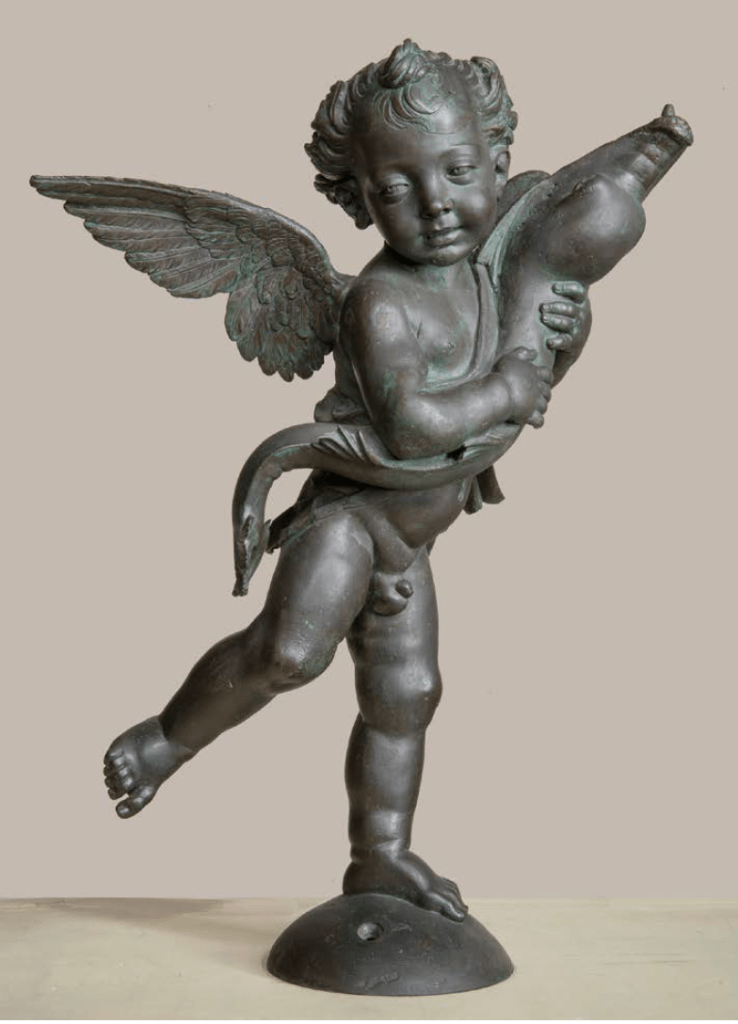
Figure 4
Tilted Arc, Richard Serra, 1981
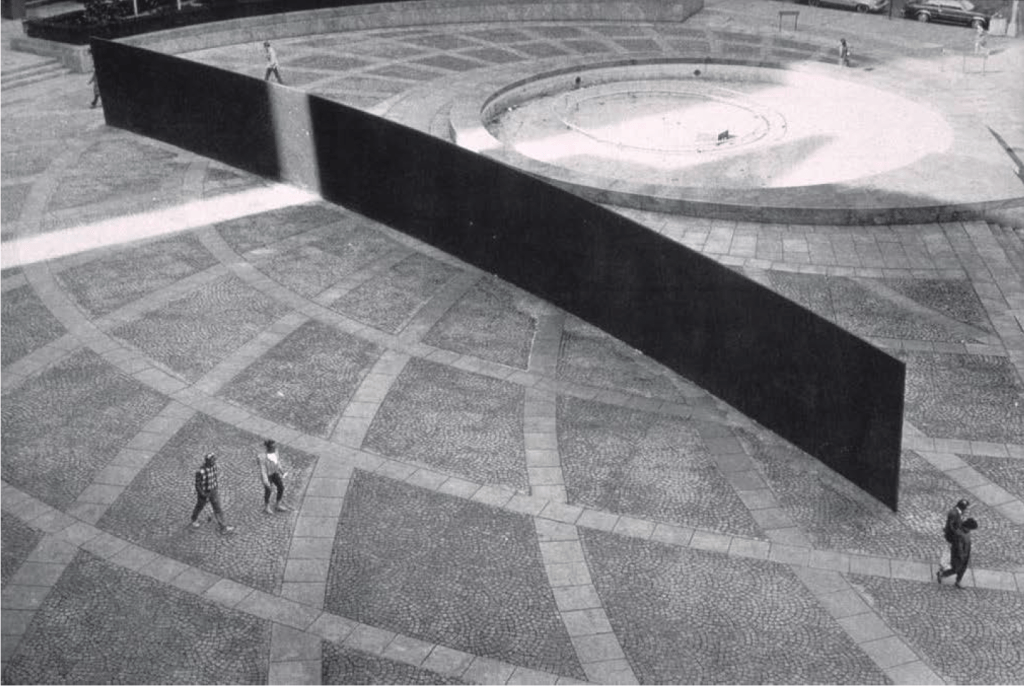
In 1981, Richard Serra’s controversial Tilted Arc (Figure 4) was installed outside government buildings in Federal Plaza, New York. The infamous sculpture immediately created public outrage and was eventually removed and destroyed. This episode, as well as Serra’s free-standing arc pieces have a lot to teach about sculpture appreciation. At first, Tilted Arc was damned an obstacle to the public space of the plaza. A criticism such as this discloses another fundamental characteristic of sculpture, that “it is distinctively related to the space in which it lies” (Hopkins, 2003, p. 8). Hegel first conceptualized this notion in his Lectures on Aesthetics, “a sculpture remains essentially connected with its surroundings. Neither a statue, nor a group, still less a relief, can be fashioned without considering the place the work of art is to be put. A sculptor should not first complete his work and only afterwards look around to see where it is to be taken: on the contrary, his very conception of the work must be connected with specific external surroundings and their spatial form and their locality” (Hegel, 1974, p. 702).
Serra´s Tilted Arc made evident that the public square was in fact a square, because the piece, at the very least, dislocated its foremost function. Moreover, if it turns out that sculpture is contingent to the space it inhabits, then the “space around the sculpture is an essential part of the perceptible structure of that sculpture” (Martin, 1976, p. 282). Put differently, a sculptural experience can only arise if there is a continuum between the sculpture, the space it’s held in and the viewer himself. This is precisely why Serra deemed his arc site-specific and not portable; Tilted Arc was fashioned only to exist in this space.
Since none of the above-mentioned conditions are met when appreciating scale models; we can argue that scale models have little in common with sculpture; they are simply different forms of representation. This is not to say that art can’t be made from scale models or related modes of representation. Let’s consider some thought-provoking examples.
Charles Ray Firetruck (1993) (Figure 5) consists of a life-size firetruck resembling a scaled-up firetruck toy. This humorous artwork, which is meant to always be displayed in front of museum entrances, not only plays on our phenomenology with all kinds of perceptual ambiguities; it also functions as a serious yet playful institutional critique: the museum is on fire! Ray’s sculpture does what great sculpture has always done, it actives us because it “enlivens space, sending out forces that creates urges in the viewer to respond with bodily movement” (Irvin, 2013, p. 6). By embodying an instrument of emergency, Firetruck demands action: it’s a call to put out the fire inside the museum. This crisis nonetheless is imaginary.
Figure 5
Firetruck, Charles Ray, 1993

From 1938 to 1942, Marcel Duchamp made a series of “portable museums” called Boîte-en-valise (Figure 6). These boxes contained miniature replicas, photographs, color reproductions of works by Duchamp, and one original work each. These boxes didn’t just contain objects, they were built in a way that required several actions to be performed by the viewer to fully explore their contents. In a way, owners got to play the part of the museum by effectively treating the collection. To see the “collection”, owners had to open, close, fold, slide, pull, turn, hold, hang and insert several miniature objects and compartments. With this manipulative design, “the miniaturization of the individual works, demands that vision be made haptic -in the handling of objects, in the opening and closing of the lidded compartments, in the rubbing of fingers across the black creased folders of reproductions, in the sliding and movement of the celluloid versions of glass works, in the invitation to touch the palm-size urinal, glass ampoule, and the typewriter cover- rejecting the pure ocular-centrism typical of the museum” (Filipovic, 2016, p. 133). Put differently, by identifying and acting on the phenomenological call to action embedded in miniatures, Duchamp pointed at the denial of embodied vision enforced by museums. Boîte-en-valise allows viewers to physically become intimate with the works, to see you must touch.
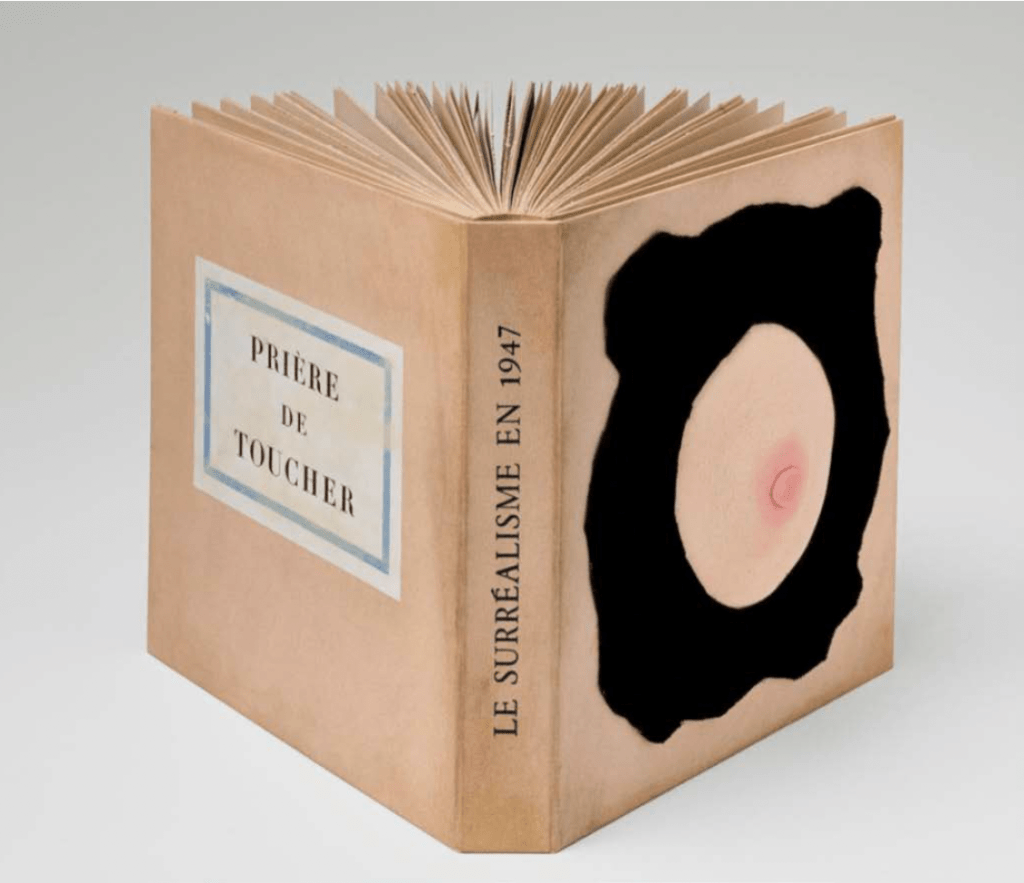
This notion resurfaced in Duchamp’s work soon after with Prière de toucher (Please touch) (Figure 7), a catalog cover made for the exhibition Le Surréalisme en 1947. The backside of the publication featured a label with the work’s tittle. “The label had a specific target: Duchamp explicitly requested of the printer that the lettering mimic the exact typeface used for the museums warning sign accompanying works everywhere in French museums -Prière de ne pas toucher (Please do not touch)” (Filipovic, 2016, p. 190). More importantly, the idea was fully fleshed out in the posthumously revealed, diorama-like masterpiece Étant Donnés (full title: Étant Donnés: 1. La Chute d’Eau, 2. Le Gaz d’Éclairage [Given: 1. The waterfall, 2. The illuminating gas]), in which the viewer/museum visitor has to touch the wooden door to be able to see through the peepholes.
Figure 6
Boîte-en-valise, Marcel Duhcamp, 1938-1942
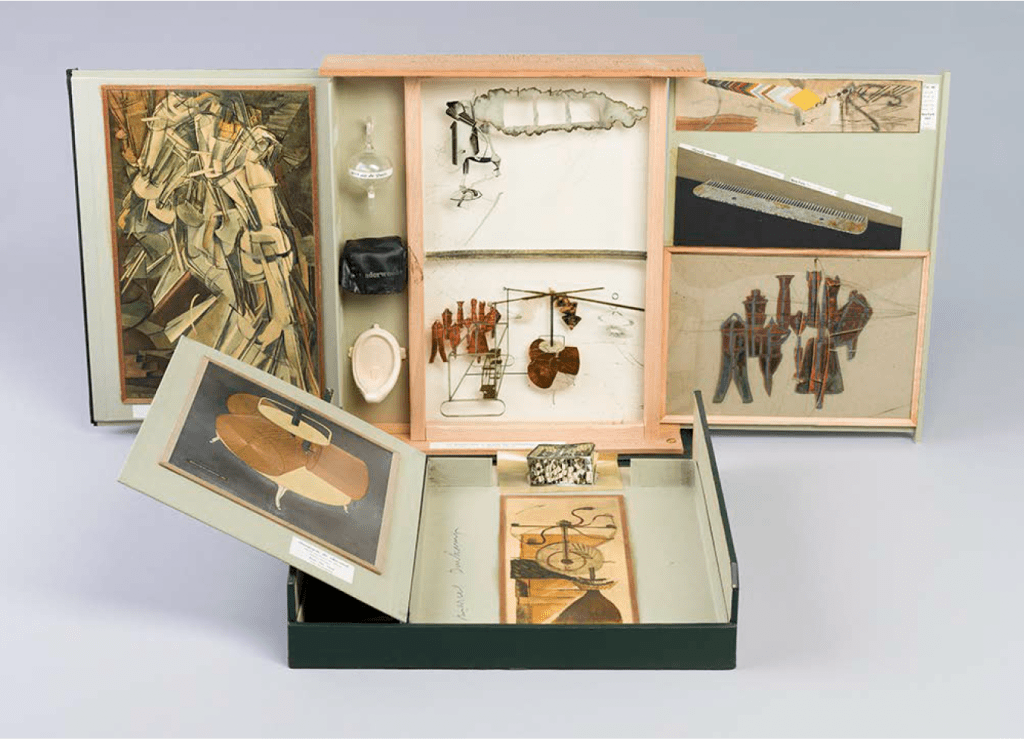
Figure 7
Prière de toucher (Please touch), Marcel Duhcamp, 1938-1942
What’s more, Duchamp employed vernacular miniatures to test traditional exhibition practices and challenge social taste values. In 1960, Duchamp and André Breton organized the show The Surrealist Intrusion in the Enchanter’s Domain in New York. The exhibition was everything but conventional. At the entrance, people could have their future predicted by a fortuneteller. “Inside, the excruciating sound of a child’s blundered piano practice filled the air, clocks bearing different times hung from the ceilings of the gallery’s rooms, a ray of light (suggesting either the setting or rising sun) traversed the gallery, and snaking through each of the different spaces was a garden hose” (Filipovic, 2016, p. 197). Adding to the mounting list of daring features in the exhibition, Duchamp placed on each of the roughly 150 artworks, “a little flag denoting the nationality of the artist who had created it. Not far away, an electric toy train circled in a bay window, its string of cars bearing the names of the exhibition’s artists. Both gestures served as Duchamp’s parodied response to the standard exhibition label” (Filipovic, 2016, p. 197).
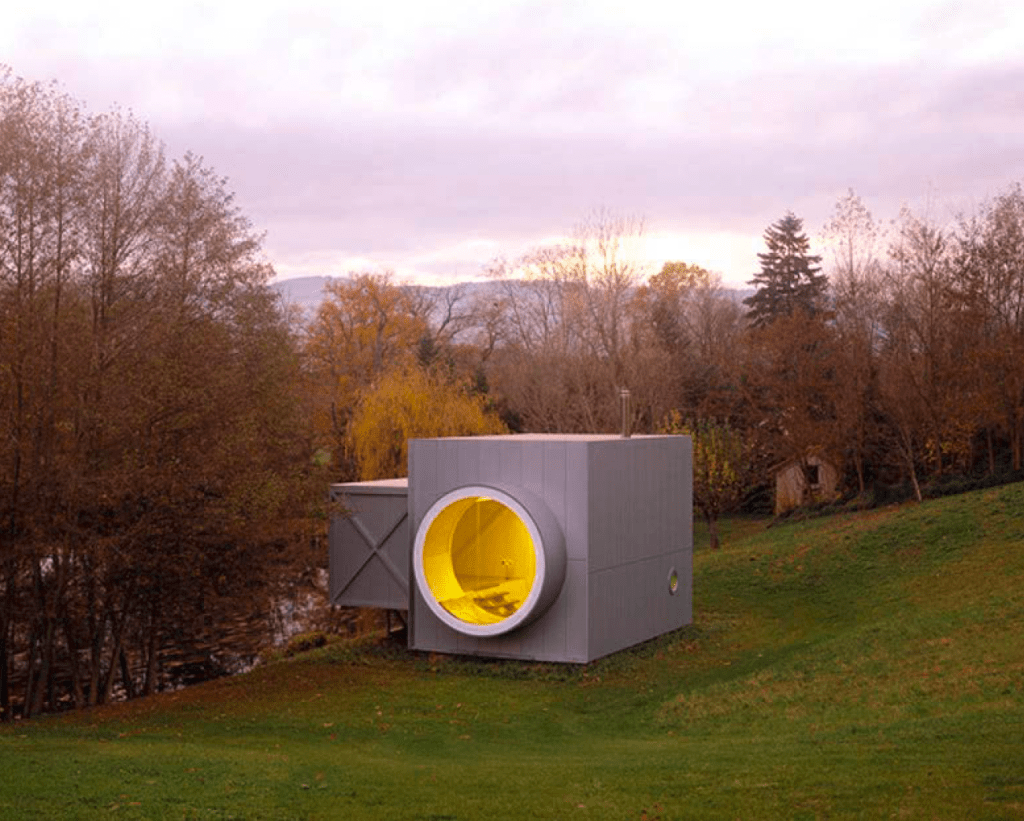
For thirty years, contemporary German sculptor Thomas Schütte has produced a body of work related to architectural spaces using maquettes. With these deceivingly simple and oddly built works, which sometimes shift between miniatures and scale models, Schütte critiques established architectural methods and styles, both formally and materially. However, Schütte’s Houses are not built with the traditional architectural objective of exploring form and function. In fact, these models aim to comment on contemporary society, offering artistic and politically provocative perspectives. Schütte maquettes function as metaphors for his critical worldview, the museum becomes a crematorium, modernism is depicted as a form of playful violence, and the temple for individuals is as much a sanctuary as it is a prison. Interestingly, Schütte’s Houses ambiguously sway the phenomenology of scale models. With the Temple series (Figure 8), the models present as considerably crafted and inviting but deny visual and corporeal access. Other times, as with the One Man House series, the plain but decidedly open constructions reveal interiors with nothing of interest. The Temples are built from hyper capitalist Lego bricks, the One Man House from impersonal materials such as metal and polycarbonate sheets. In recent years, several of these models have been realized as full-scale constructions (Figure 9).
Perhaps the most fascinating example involving art and scale models is that of contemporary Belgian artist Wim Delvoye’s Cloaca Machines historically dovetailing with Jacques Vaucanson’s Digesting Duck (Figure 10) As noted above, the historical importance of the now lost duck is hard to overstate, distinguished 18th century scholar Joseph Spence recounts:
If it were only an artificial duck that could walk and swim, that would not be so extraordinary: but this duck eats, drinks, digests and sh-ts. Its motions are extremely natural; you see it eager when they are going to give him his meat, he devours it with a good deal of appetite, drinks moderately after it, rejoices when he has done, then sets his plumes in order, is quiet for a little time, and then does what makes him quite easy. (Landes, 2011, p. 55)
Figure 8
Nuclear Temple, Thomas Schütte, 2017
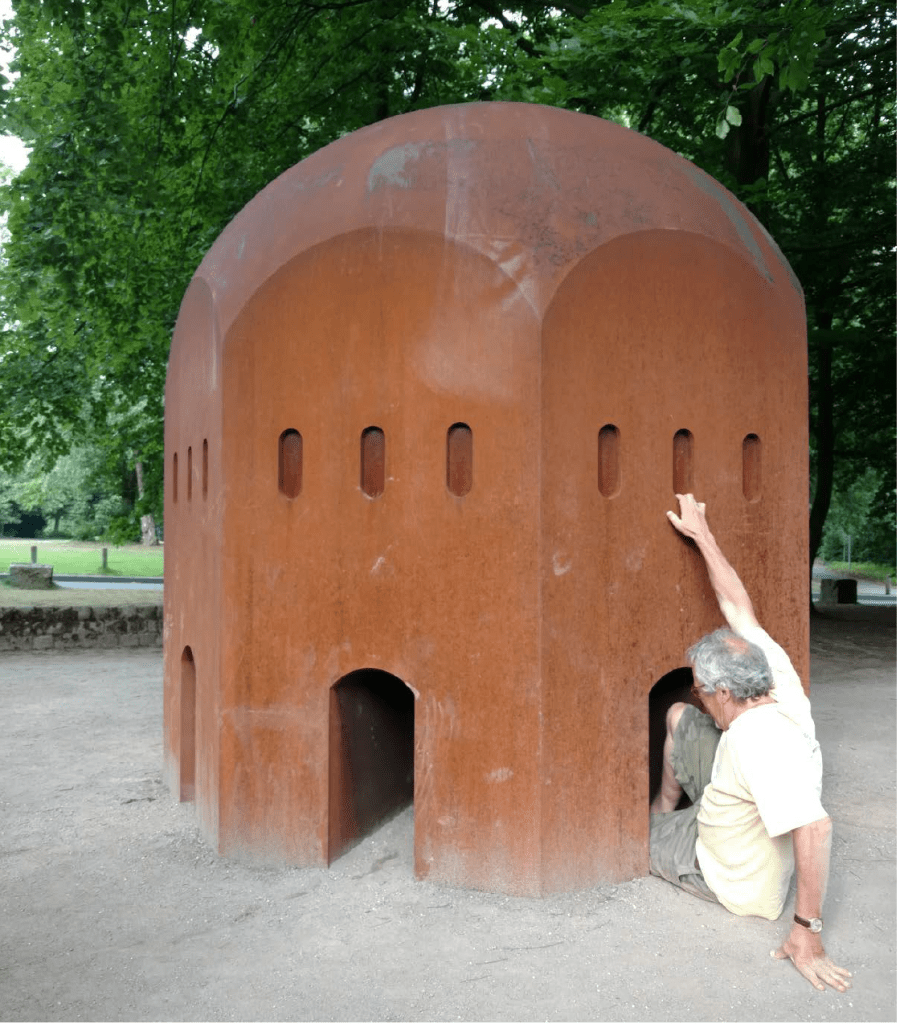
Figure 9
One Man House II, Thomas Schütte, 2009
For all its ingenuity and marvel, Vaucanson’s duck turned out to be a fraud. Quickly after it was scrutinized, it became clear that the automata did not digest its food at all. The breakdown was staged, and the released substance was a mixture of green-dyed breadcrumbs which were expelled at the desired moment using a secret mechanism. In hindsight this is hardly a shock, but the fact that Vaucanson’s ambition was picked up by a contemporary artist in the 21st century sort of is.
In the year 2000, Wim Delvoye presented the first of many food digesting machines: Cloaca Original (Figure 11). “In his cloaca machine, artist Wim Delvoye introduces a mechanical artwork that actually digests food and turns it into excrement. The excrement produced by the machine is vacuum sealed in Cloaca branded bags and sold to collectors and dealers; every series of excrement produced has reportedly sold out” (Landes, 2011, p. 56). Paradoxically, what became the duck’s commercial demise, became the cloaca’s success. At any rate, despite its straightforward objective, to model the human digestive system mechanistically, the nature of Delvoye’s machines is hard to pinpoint. Their consequences touch on the biological, industrial, cybernetic and philosophical. Even a general description proves challenging. Artforum’s contributor, Jean-Pierre Criqui, elaborates on the general process by which these mechanomorphic creations operate:
While Cloaca resembles an assembly line more than a person on the outside, the digestive process, controlled by a computer that the artist manipulates remotely via the Internet, is faithfully reproduced. At one end stands a stepladder allowing access to the basin into which meals (catered by the museum, with soft drinks and alcohol to wash them down) are fed; at the other, a circular tray receives the output of this complex procedure, one each of us regularly carries out without much thought (provided all goes smoothly). Between the two, a battery of transparent mechanisms and receptacles maintained at 98.6 degrees Fahrenheit—body temperature—absorbs, at strategic intervals, the enzymes and juices necessary for digestion. Once activated, the machine eats twice a day (breakfast and a late lunch), even when the exhibition space is closed, which suggests a certain level of dedication on the part of the staff—not to mention the tolerance shown by employees and viewers alike for the highly realistic odor that emanates from cloaca‘s nether regions. Delvoye collects the pungent matter daily and packages it, suspended in resin, in small jars, which he then sells, apparently with much success. (Criqui. 2011, p. 282)
Nonetheless, to read Delvoye’s machines along the lines of 19th century automata philosophy may not be as relevant as first thought. A criticism that an anachronistic determinism of utopian production runs through his view of the human body can be put forward. In his cloaca machines, which intentionally model the human digestive system as if it were a mere mechanical process, “the sciences of labor were integrated with laboratory techniques. Enlightened modernity viewed the body as a machine- and in chemistry as in industrial production surrounded it with ever more complex systems of human-built technologies” (Schaffer, 1999, p. 134). Be that as it may, cloaca machines also participate in an art historical conversation as they reference artists such as Marcel Duchamp, Kurt Schwitters, and Piero Manzoni.
Figure 10
Vaucanson’s naked mechanical duck, 1880

Figure 11
Cloaca Original,
Wim Delvoye, 2000

METHODOLOGY
Art-based research represents research processes that prioritize and facilitate creation as an ongoing and intertwined process. Tailored to the unique practices and timelines of individual projects, these methodologies amalgamate design, experimentation, production, and/or critical and theoretical analysis of the creative process. Integral to research creation is the symbiotic relationship between the artwork and the process that brings it to life.
This approach involves questioning and exploring artistic practices to generate new aesthetic, theoretical, methodological, epistemological, or technical knowledge. Art-based research thrives on the interplay between the act of creation and the inquiry driving it, aiming to innovate and advance various domains through a fusion of artistic exploration and scholarly investigation. The selection of the art-based research methodology for crafting a scale model is justified by its ability to offer a holistic and innovative approach to model construction. Unlike traditional methods that might focus solely on technical accuracy, an art-based research approach integrates creative exploration and scholarly inquiry. This methodology encourages interdisciplinary collaboration, fostering a synergy between artistic expression and research-driven processes. It allows for experimentation with diverse materials, techniques, and design concepts, fostering a more dynamic and adaptable model creation process.
Moreover, by intertwining artistic creativity with scholarly investigation, this approach has the potential to produce not only accurate scale models but also to uncover new perspectives, insights, or knowledge in the field. Art-based research promotes a deeper understanding of the subject matter, stimulates innovative thinking, and can enhance the communicative and explanatory power of the scale model beyond mere replication. Suffice it to say, the selection of the art-based research methodology for crafting a scale model involves a meticulous and strategic approach. Initially, it necessitates a comprehensive understanding of the purpose and objectives of the model, whether it’s for scientific exploration, architectural design, historical representation, a combination of these, or another purpose altogether.
The choice for the construction methodology should align closely with the intended outcome, considering factors like accuracy, feasibility, available resources, and the level of detail required. Researchers may opt for methodologies such as prototyping, CAD (Computer-Aided Design), 3D printing, handcrafting, or a combination of these techniques, each offering distinct advantages in precision, speed, material versatility, and cost-effectiveness. Careful deliberation on the strengths and limitations of each method is pivotal to ensure the model’s fidelity, functionality, and relevance to the research goals, ultimately leading to a comprehensive and reliable representation.
Note on the Prototype
Tracing back the history of railroad prototypes is always a challenge. Over the course of their often long-spanning careers, locomotives and rolling stock change mechanically and aesthetically, and the recording of these variations is seldom done by the railroads. Historians often rely on individual railroad photographers such as Otto Perry and Richard H. Kindig who dedicated their career to this documentary-driven genre.
The best account for the history of the all-steel D&RGW Pullman heavyweight coaches is found on an article by historian Bob Webber on The Prospector (V8 #4) Heavyweight steel coaches, Motorcar 592, M-75 4-8-2s, a publication by The Rio Grande Modeling and Historical Society. In it, Webber covers the prototype history from delivery in 1909 to their final days in the 1960s. It’s worth noting that out of original 51 cars, the D&RGW rebuilt five coaches into parlor coaches at the Burnham shops in 1939, these cars were numbered: 1000, 1001, 1002, 1003, 1004. Hence the 1000 series name.
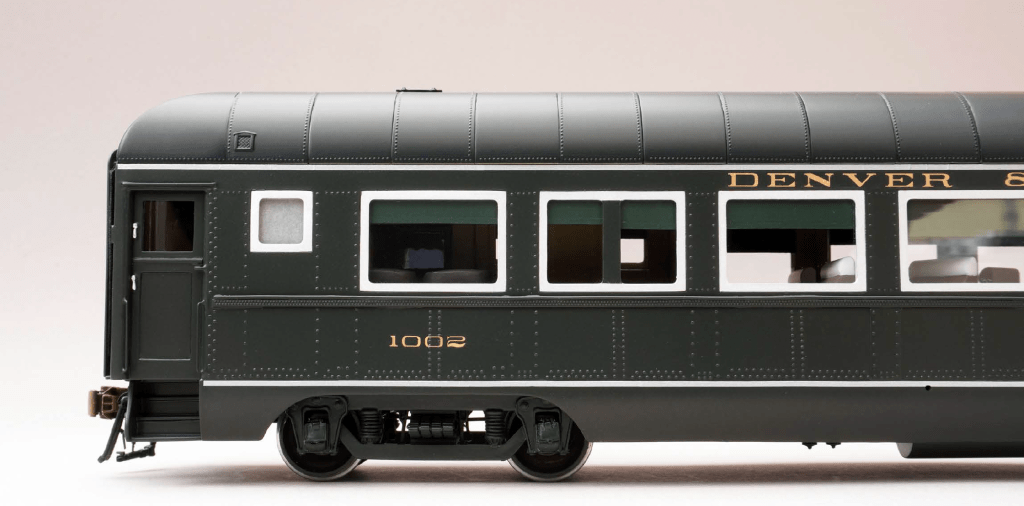
On the rebuilt group, Webber details, “these cars weighted 132,760 lbs after conversion, (AFE T-7266, total 1000-1002; $23,493,77 each; 1003-1004 $23,638,17); seated 55 passengers. All cars received air conditioning, new electric lightning and fixtures with new generators; new pressure water system; and Heywood-Wakefield rotating and reclining seats)” (Webber, 2009, p.17). For all intents and purposes, the constructed model depicts one of these five cars in the 1940-1945 Pullman green time frame as “rebuilt for service on the Exposition Flyer (Figure 12). The cars were modified with “Stream-styled” (rounded) roof, skirting, larger windows, radio antennae and a unique paint scheme” (Webber, 2009, p.17).
Figure 12
Cloaca Original, Wim Delvoye, 2000

Note. This well-known promotional image showcased the car’s large scenic windows as well as the Heywood-Wakefield rotating and reclining seats. From Hol Wagner, Burlington Bulletin No. 42 The Exposition Flyer, by Cooper, Edmund, 1939.
Building Process Overview
Although there is no conventional method for building scale models, the overall process by which this Pullman car model was built is common within the scratch-building modeling category. In the initial stages, following common practice, mechanical drawings and historical photographs were acquired. Later, cutting-edge technologies like laser cutting and 3D printing were employed. It’s worth noting that creating a Pullman heavyweight car from the ground-up in 1/48 scale is a highly involved process, and that documenting every single step of the build over long periods of build time is an impossibility. Nonetheless, the following aspects and techniques are considered some of the most critical in high quality, scratch-building endeavors:
Erection Drawings: The starting point of any project such as this lies in acquiring accurate erection drawings of the desired prototype. In this case the Pullman Heavyweight Car D&RGW 1000 series chair car. These drawings serve as a cornerstone, providing meticulous measurements, intricate details, and essential specifications. Engineers and modelers meticulously analyze these blueprints, ensuring every aspect is faithfully replicated in the miniature version.
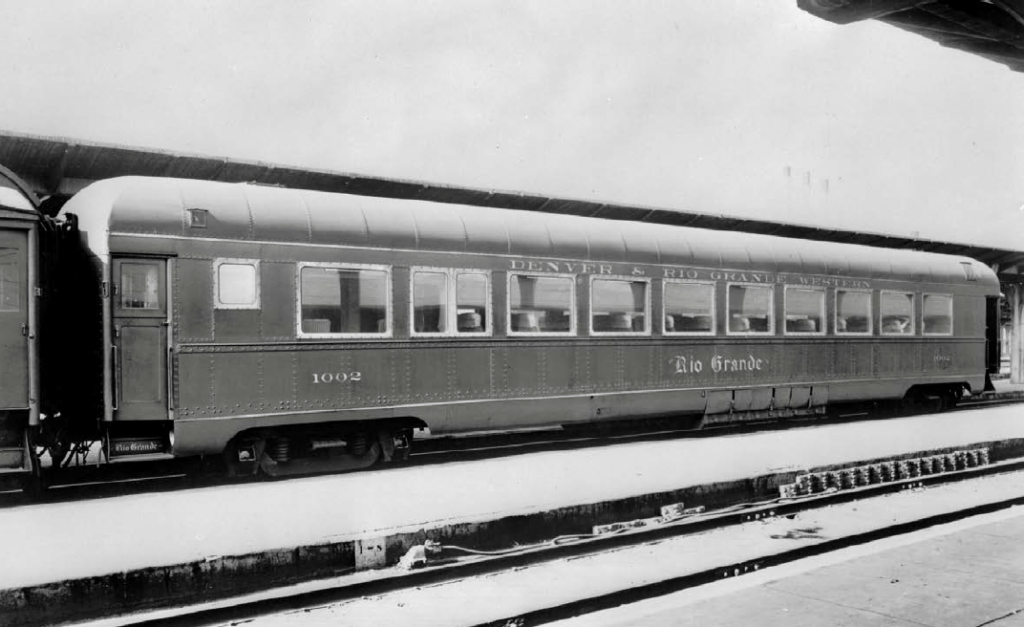
This stage sets the foundation for the entire construction process, guiding subsequent steps with precision and clarity. For this particular build, the erection drawings were found in the Burlington Bulletin No.42 The Exposition Flyer. A comprehensive, 270-page publication on the history of this obscure yet historic train. This publication was put forward by the Burlington Route Historical Society (BRHS) (Figure 13). Several historical photographs of the car were found also in The Prospector Volume 8, number 4; a publication by the Rio Grande Modeling and Historical Society (RGMHS) (Figure 14).
Figure 13
Erection Drawing for the 1000 series rail cars

Figure 14
View from station platform across tracks to the Denver and Rio Grande Western Railroad Coach 1002 taken during the Summer of 1939.
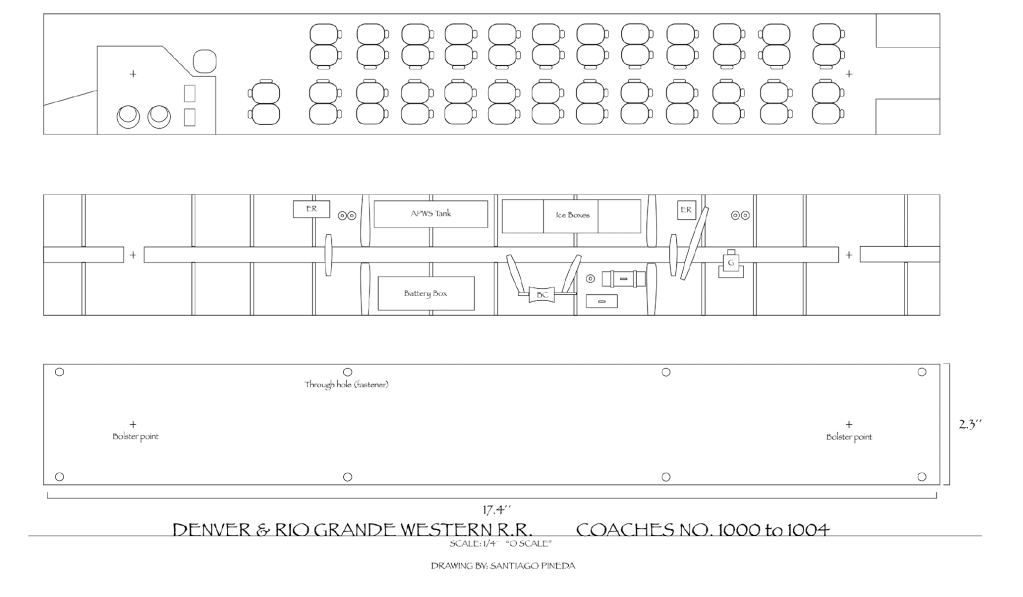
Mechanical Drawings: To further refine the construction process, true-to-scale mechanical drawings are utilized to create laser cut brass sheets (Figure 15,16). These drawings, meticulously prepared to exact specifications, guide the laser cutting process with precision. Multiple mechanical drawings were made to create laser cut parts. In this painstaking process, InDesign served as the core software program to create these drawings (Figure 6). Once the drawings were thoroughly reviewed, they were exported to the appropriate .svg format. These files were later sent to a metal laser cutting machine that made the parts out of a 0,5 mm brass sheet.
Laser Cut Parts: Laser cutting technology, renowned for its accuracy and efficiency, transforms mechanical drawings into intricately cut brass sheets, ready for assembly. This approach ensures uniformity and consistency in component fabrication, minimizing errors and optimizing fitment during assembly. The laser cut brass sheets not only streamline the construction process but also elevate the model’s quality and authenticity, showcasing the seamless integration of traditional craftsmanship with modern manufacturing techniques (Figure 17,18).
Laser cutting technology revolutionizes the construction process by enabling precise and intricate component fabrication. Windows, doors, and other intricate elements are meticulously cut from materials such as brass, acrylic and wood. Laser cutting ensures crisp edges and intricate detailing, streamlining assembly and enhancing overall quality. This cutting-edge technology empowers modelers to realize complex designs with unparalleled accuracy, pushing the boundaries of craftsmanship to new standards.
Figure 15
Mechanical drawing for car body of the 1/48 scale model

Figure 16
Mechanical drawing for the frame, the interior and the undercarriage of the 1/48 model
Cutting Templates: With mechanical drawings as the guiding light, the next phase involves crafting cutting templates. These templates, transferred onto materials like styrene sheets or brass, serve as the blueprint for precision cutting. Each piece undergoes meticulous shaping and sizing, adhering closely to the specifications outlined in the drawings. Attention to detail is paramount to ensure seamless assembly and an authentic representation of the original design.
Figure 17
Vectorized file for laser cutting brass sheet
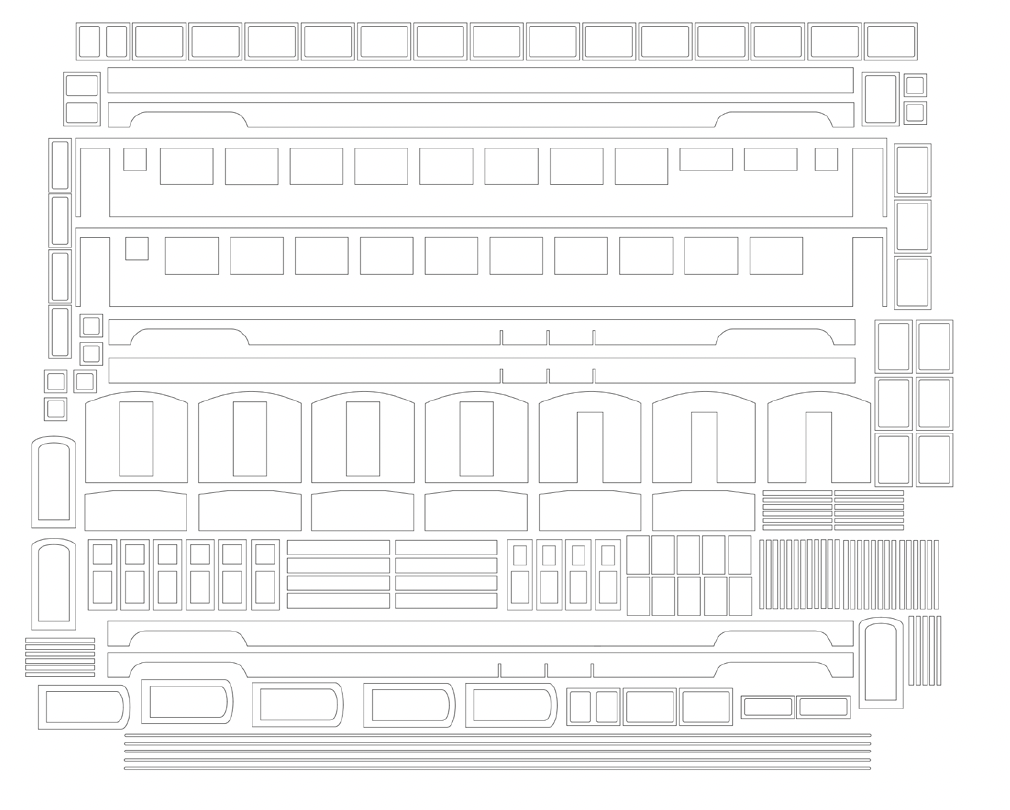
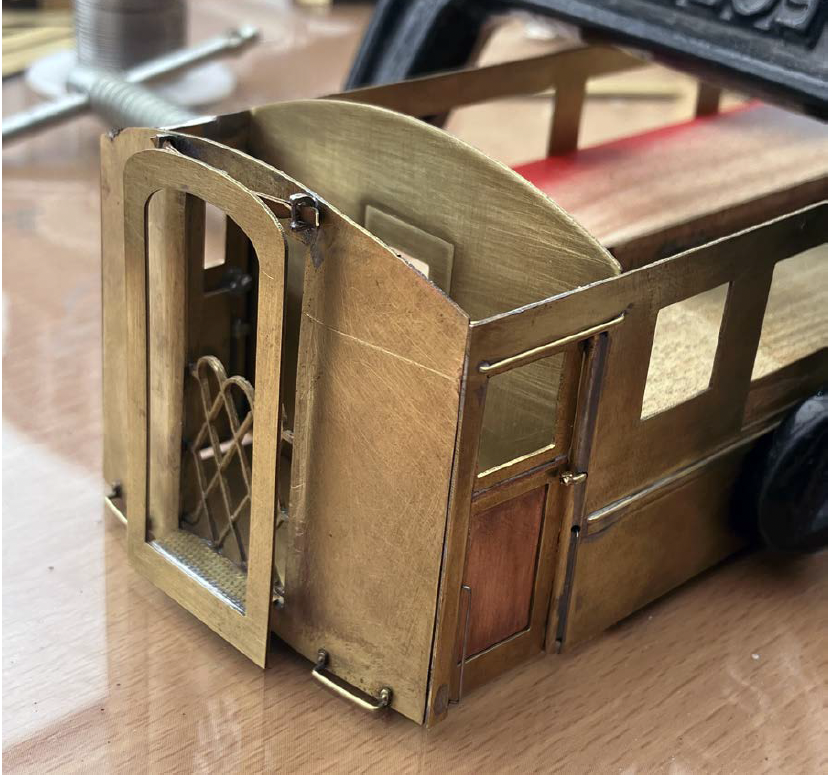
Figure 18
Vestibule construction using laser cut parts
Brass Cast Parts: Incorporating brass cast parts adds another dimension of authenticity and intricacy to the model. Utilizing bass-cast parts allows for the use of durable and intricate components such as ornate detailing, hardware, and small-scale fixtures. These high-resolution castings are reproduced with exceptional precision. Brass casting allows for the replication of fine details and textures that may be challenging to achieve through other methods. These cast parts infuse the model with a sense of historical accuracy, capturing the essence of the Pullman heavyweight car’s design with remarkable fidelity (Figure 19). Each brass cast component undergoes meticulous finishing and integration, seamlessly blending with other elements to create a cohesive and visually stunning final product.
Figure 19
Undercarriage construction using brass cast parts


Note. Here we see the undercarriage construction process both in primer and final stages. Note how the model portrays the mechanical workings of the prototype despite being invisible in the right side up position.
Metal Etched Parts: Etched parts elevate the model’s realism by adding intricate details and textures. Utilizing specialized etching techniques, fine patterns, rivets, and other delicate features are etched onto thin metal sheets. These components are painstakingly cut out and prepared for integration. Beyond their aesthetic appeal, etched parts contribute to the model’s authenticity, capturing the essence of the Pullman heavyweight car’s design with unparalleled fidelity.
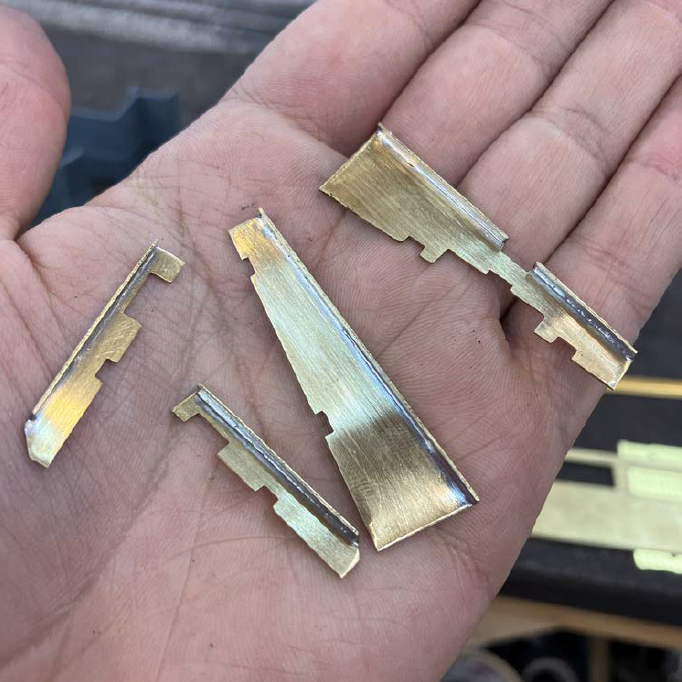
Soldering: The use of soldering serves as the backbone of assembly, forging strong bonds between brass frames, roofs, and undercarriage components. Meticulous soldering techniques ensure structural integrity and stability, guaranteeing the model’s longevity. Skillful application of flux and solder yields seamless joints and a professional finish. Each soldered connection embodies precision and craftsmanship, embodying the artistry of traditional metalworking in miniature form (Figure 20).
Figure 20
Brass construction using soldering techniques


Resin 3D Printed Parts: Modern innovation converges with traditional craftsmanship through the integration of resin 3D printed parts. Leveraging software like FreeCAD, I designed intricate components impossible to acquire or fabricate using conventional methods. Even though the process of creating these renderings is remarkably time consuming, the payoff when printed is well worth the investment (Figure 21).
These designs are translated into printable files, materializing into physical form through high-resolution 3D printers like the Elegoo Mars 9k. This printer was acquired for the project because of its remarkable printing resolution. The Elegoo
Note. Here we see the undercarriage construction process both in primer and final stages. Note how the model portrays the mechanical workings of the prototype despite being invisible in the right side up position.
Figure 20
Brass construction using soldering techniques
Mars 9k is the only printer in the market that, at this time, is capable of printing at a layer height of 19 microns (μm). With this level of precision, resin 3D printed parts offer unrivaled resolution and customization, enabling the incorporation of intricate details and unique features (Figure 22).
This marriage of technology and tradition empowers modelers to push boundaries, creating bespoke creations that captivate and faithfully reproduce the intended prototype. The only downside of resin prints is their fragility when compared to brass-castings. Thus, the 3D printed parts for this project are parts that don’t play any part in the structure of the model and may be replaceable if compromised or broken.
Figure 21
3D renderings for resin printing

Figure 22
Resin printing process

Custom Decals: Since no model of this prototype has been produced in 1/48 scale, there are no water-slide decals available. Thus, custom decals of the car’s artwork had to be made. The design was drawn in InDesign following the prototype as seen in the mid-1940s and matching the model’s scale. The design was saved as a vector file (Figure. 23). Later, the file was sent to a professional, New Hampshire-based decal printing business called Highball Graphics for printing (Figure. 24). This method is the industry’s standard for custom builds because of its reliability and outstanding results.
Figure 23
Vectorized lettering artwork
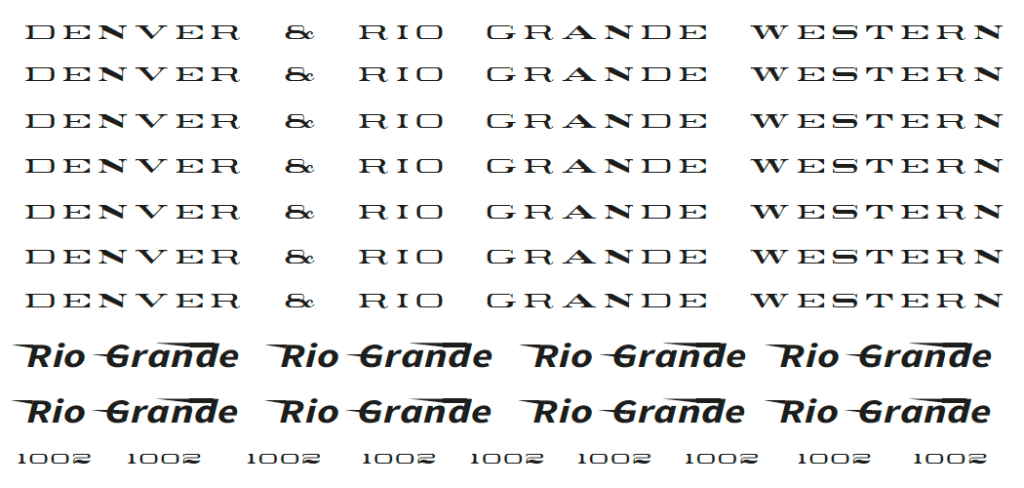
Figure 24
Custom printed decals

Resin Rivet Decals: Raised resin details on decal paper provide modelers with the possibility of depicting scale rivet work accurately. In this case, a variety of rivet sizes and surface details helped model the roof and the car body with a remarkable level of fidelity (Figure 25). Once applied, the rivets were painted over to blend in with the surface (Figure 26). The rivets used on this project were manufactured by Archer Fine Transfers.
Figure 25
Raised resin rivet application


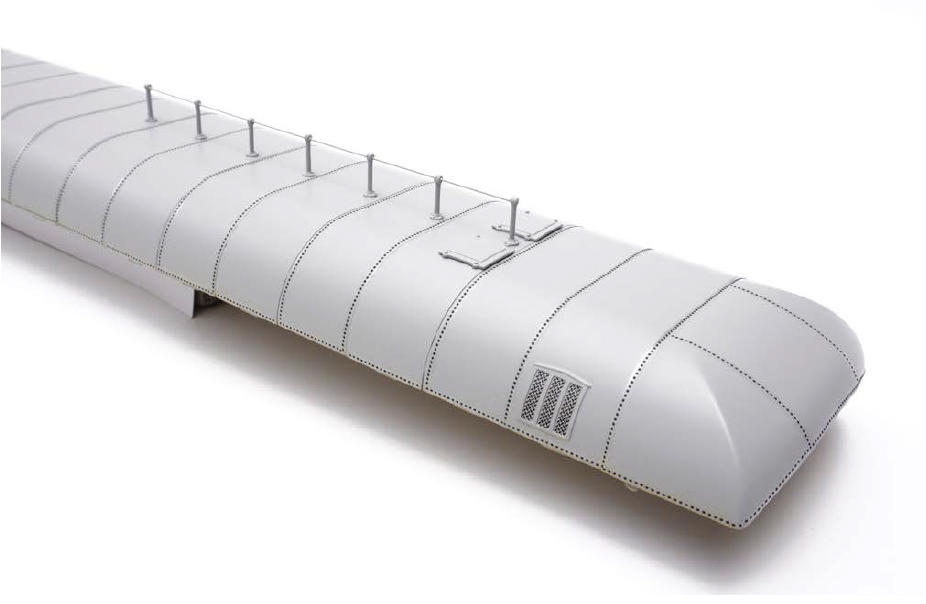

Figure 26
The rivet work on the final model resembles the prototype precisely
DISCUSSION AND ANALYSIS
Crafting a scale model is a meticulous, highly involved, and labor-intensive process that demands a blend of technical expertise, creativity, and historical research. Beginning with the acquisition of accurate reference material such as historical drawings and photographs, modelers evaluate the project’s complexity and feasibility. Utilizing modern technologies such as laser cutting and 3D printing, alongside traditional techniques like soldering and handcrafting, model makers meticulously fabricate and assemble each component with utmost precision. In the case of this 1/48 scale Pullman heavyweight car, each piece of the build has gone through careful design, shaping, sizing, and finishing to ensure seamless integration and authenticity. This process was not merely about replication but also about capturing the essence and character of the original design, imbuing it with a sense of history, craftsmanship, and aesthetic appeal. It was a tasking experience that required patience, skill, and dedication, but the result was a striking, tangible visual representation that invites observers to appreciate and understand the intricacies of the subject matter in an embodied and immersive way. Find below a list of figures depicting the result of the building endeavors (Figure 27).
Figure 27
A complete, scratch-built, fine scale 1/48 model of the D&RGW 1000 series rail car
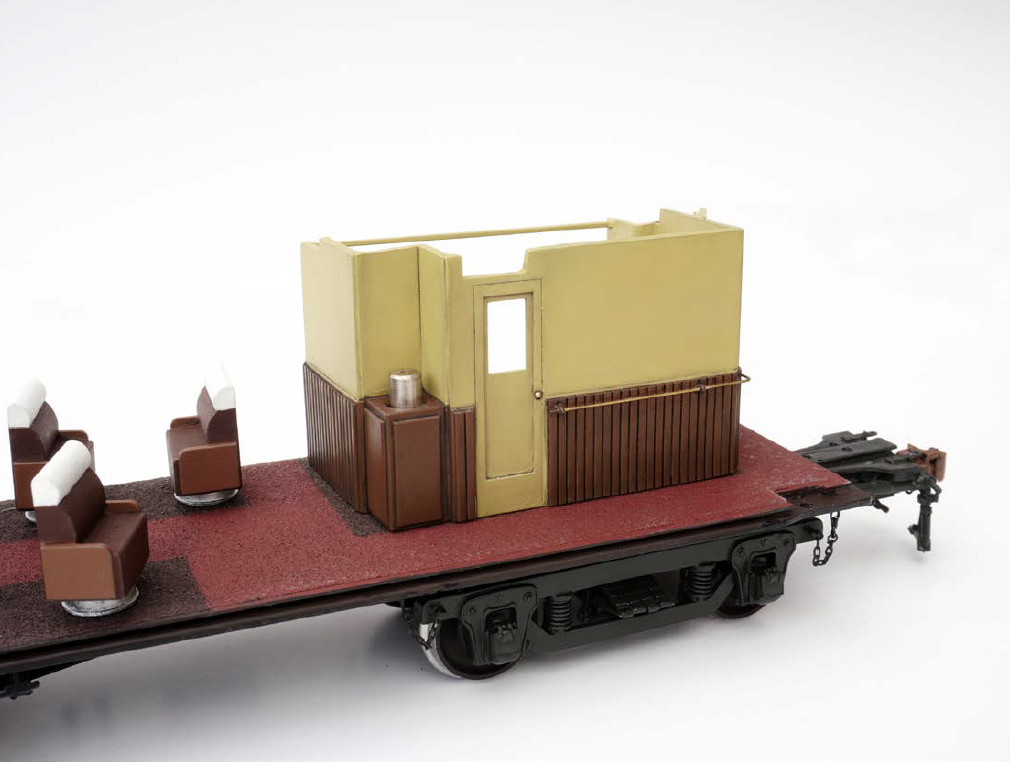

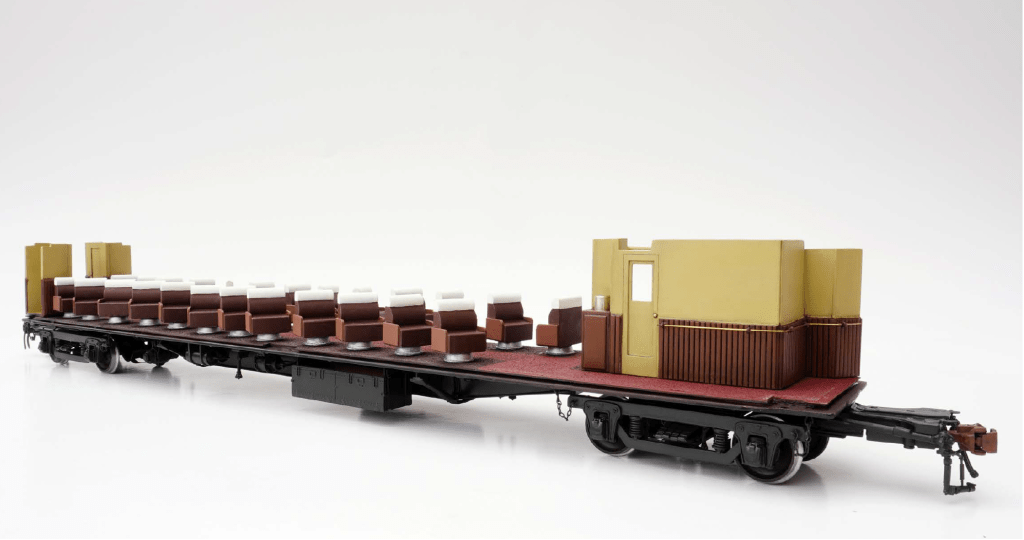
Note. Here we can appreciate the car interior before final assembly. Note how the two-toned, textured carpet and the checkered restroom floor follow Pullman Company standards.
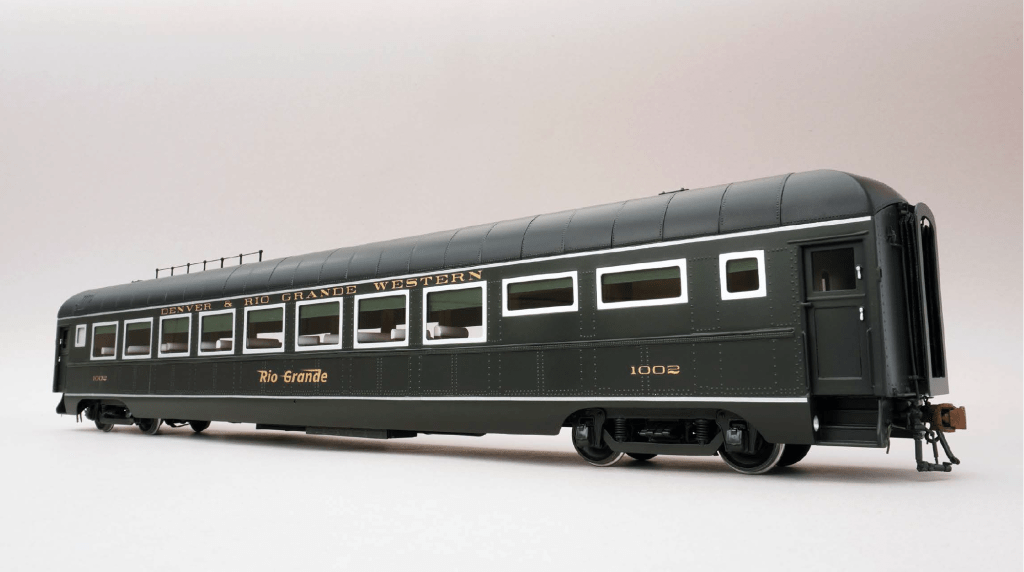

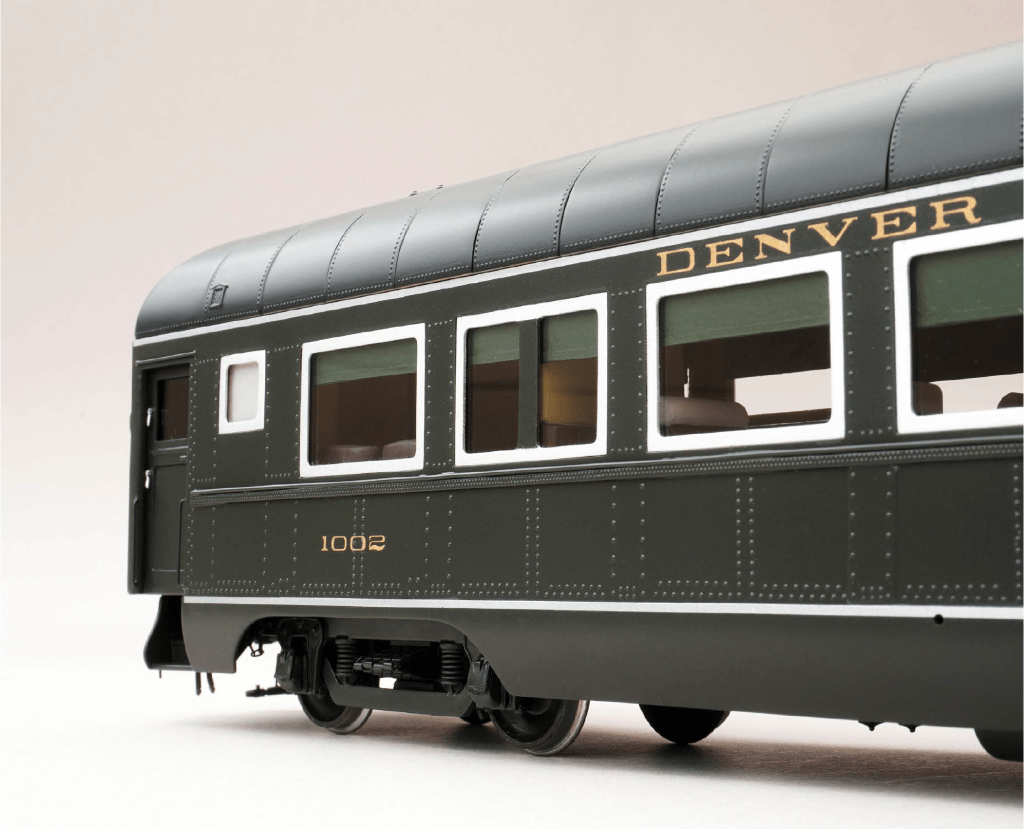
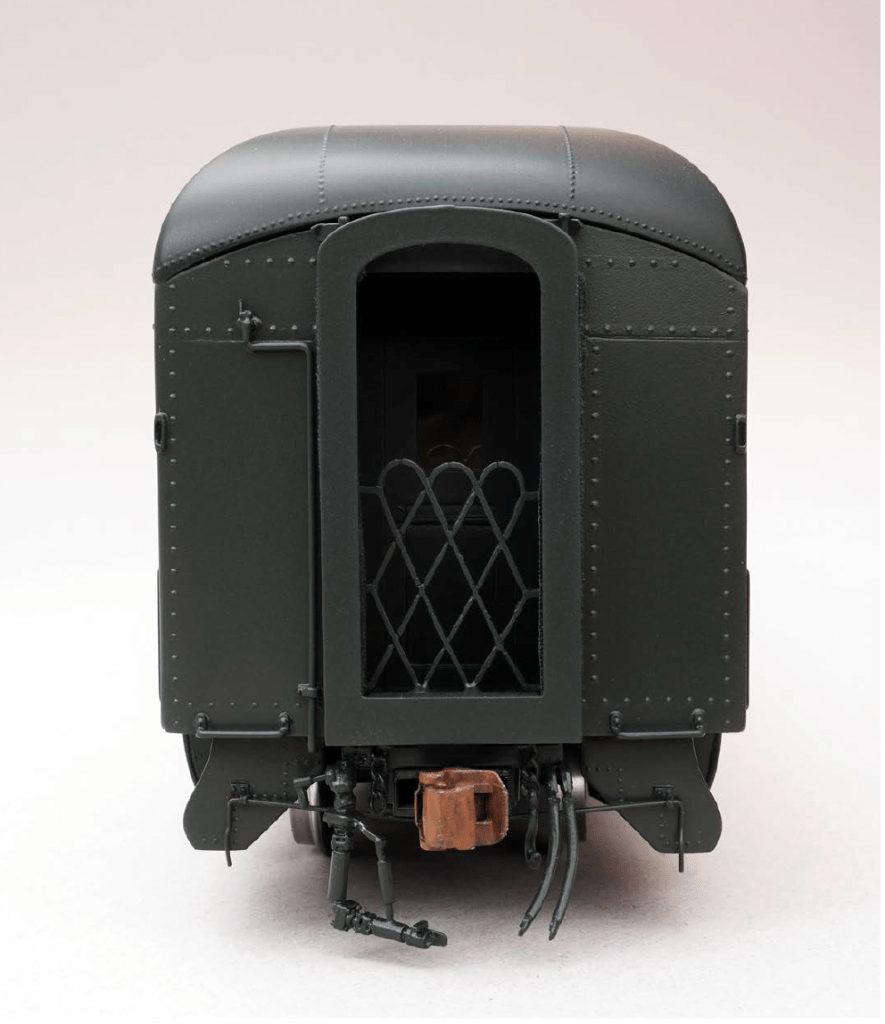

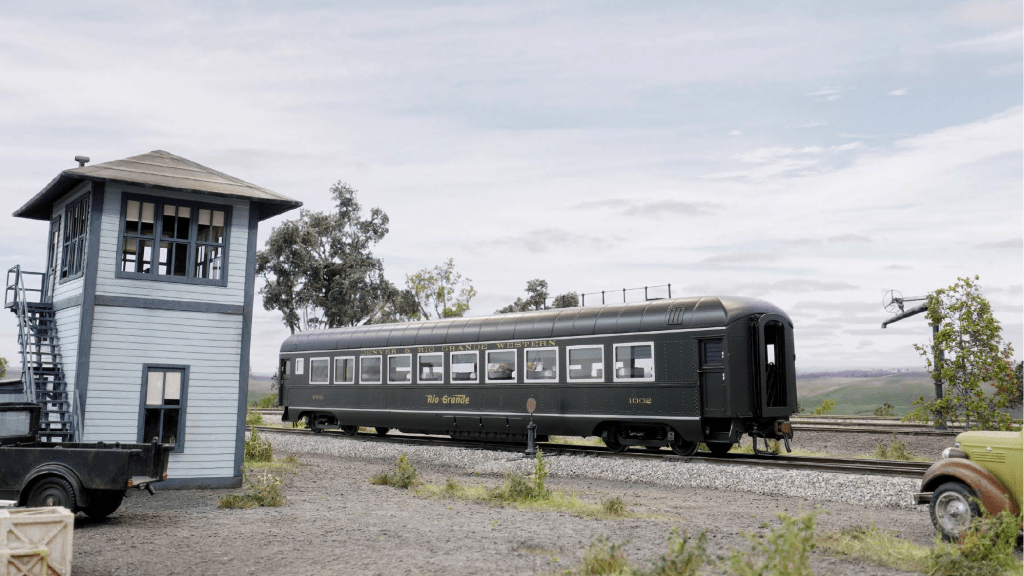
Note. The completed model on a 1/48 scale diorama. The scene recreates how the car would have appeared in 1943.
CONCLUSION
On the whole, scale modeling is not a straight-forward problem. Yet, the exploration of scale models offers a multifaceted opportunity into the intersections of art, science, and culture. Scale models serve as indispensable tools in scientific inquiry, providing researchers with a means to understand complex systems and phenomena in a controlled environment. Through meticulous construction and experimentation, scale models not only simulate aspects of reality but also deepen our understanding of it, bridging the gap between theory and practice. Miniature models can also offer poignant reflections on human identity, memory, and creativity. Whether as repositories of nostalgia, symbols of control, historical depictions, film props or original artworks, models invite us to explore the complexities of human experience through their crafted constructions, scientific utility and symbolic significance. Even today, scale models continue to captivate the imagination and prompt existential reflections on the nature of humanity and technology. As objects of fascination and sources of philosophical inquiry, scale models embody the complex interplay between humans and machines, challenging our perceptions of agency, consciousness, and the boundaries between the natural and artificial realms.
Scholarly work on scale models, miniatures and automata provides pregnant insights into scientific, cultural, social, and psychological dimensions. Through multidisciplinary approaches, these studies shed light on the significance of these methods and artifacts in shaping human understanding and experience. As we continue to explore the intricate relationships between art, science, and technology, the study of scale models remains a fertile ground for inquiry, creativity, and discovery, offering opportunities to deepen our understanding of the human condition and the world around us.
REFERENCES
Bronowski, J. (1973). The Ascent of Man. Little Brown & Co.
Clark, W., Golinski, J., Schaffer, S. (1999).The Sciences in Enlightened Europe. The University of Chicago Press.
Criqui, J. P. (2001). Eater’s Digest: Wim Delvoye’s Cloaca. Artforum.
De Solla Price, D. J.(1964). Automata and the Origins of Mechanism and Mechanistic Philosophy. Technology and Culture, Vol.5, No.1.
Doane, M. A. (2021). Bigger Than Life (The Close-Up and Scale in the Cinema). Duke University Press.
Filipovic, E. (2016).The Apparently Marginal Activities of Marcel Duchamp. MIT Press.
Hopkins, R. (2003). Sculpture and Space. Routledge New York.
Irvin, S. (2013). Sculpture. Routledge New York.
Landes, J. B. (2011). Vaucanson’s Automata and Devices of Enlightenment. ResearchGate. Link.
Longo, S. G. (2022). Principles and Applications of Dimensional Analysis and Similarity. Springer.
Massey, B. S. (1974). Units, Dimensional Analysis and Physical Similarity. Van Nostrand Reinhold Company.
Morton, F. (2009).The Prospector (V8 #4) Heavyweight steel coaches, Motorcar 592, M-75 4-8-2s. The Rio Grande Modeling and Historical Society.
Murray, G. (2019). A Certain Motion: Automata and Mechanism in Early Modern Europe. Trinity Postgraduate Review Journal.
Pearce, S. (1994). Interpreting Objects and Collections. Routledge New York.
Roudaut, S. (2022). Clocks, Automata and the Mechanization of Nature (1300–1600). Philosophies 2022.
Stewart, S. (1984). On Longing: Narratives of the Miniature, the Gigantic, the Souvenir, the Collection. Duke University Press.
Sterrett, S. G. (2019). Scale Modeling. Routledge Handbook of Philosophy of Engineering.
Wagner, H. (2003). Burlington Bulletin No. 42 The Exposition Flyer. Burlington Route Historical Society.